
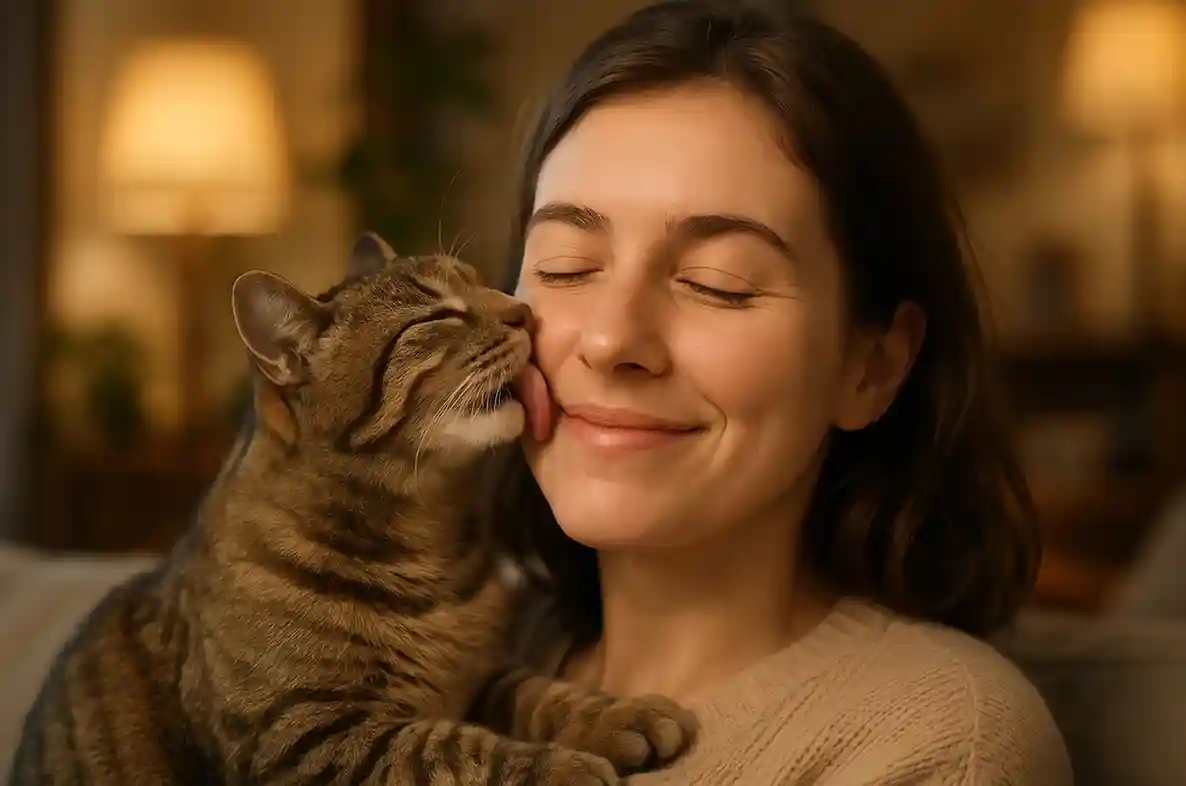
Why does my cat lick me?
Every cat owner will ask this question at some point, but normally when one is wondering why their small furry creature is compelled to groom their hand with it. The thing is that licking is not a mere gimmick. It is inborn, emotional and connected with the way cats express love, support, and trust. Your cat is not licking you, but talking to you in cat language.
My name is Dr. Elara Vance, U. S. veterinarian who has spent years of research and training with cats of any sort; the shy shelter cats, and the cat-spoilt pets. I have witnessed the power of a small gesture such as a lick that can show the whole emotional world of a cat.
In this blog, I will make you realize why your cat slicks you that much, why it really matters, and why it may be something more than love.
The Instinctive Grooming Behavior
Licking is one of the most natural and instinctive actions of cats. Kittens are groomed by their mothers since their birth. The experience they have early teaches them that licking is care, comfort and survival.
Pets are interesting in their behaviors. You can also read my article on why dogs scratch their legs when you scratch them especially when you also have a dog.
Bonding Through Shared Grooming
In the wild or multi-cat homes, cats will groom each other; a technique called allogrooming. It is an effective act of trust and social connection. By licking you, your cat is doing the same thing they’d do to another cat they care about.
Communication Beyond Words
To cats, grooming is not about physical cleaning but a language. It conveys love, acceptance and reassurance. When you are licked by your cat, they might also be reacting to your smell or disposition and licking is a method of calming both you and the cat.
That Sandpaper Tongue
Any cat owner is aware of the coarse feeling of a cat tongue. The tiny barbed forms, which are termed papillae, are composed of keratin; the same protein as that of human nails. They aid cats in cleaning their hair and getting rid of dead hair or dust.
Pet Health Symptom Checker
A Sign Of Love & Affection
By licking you, your cat is saying to you that they love you. It is not accidental or stupid, it is emotional and strongly instinctive. Licking helps cats connect, express trust, and secrete sedative hormones that assure them that they are near you.
In the case you want to establish an even greater connection with your cat, you can also read my guideline on how you can make a cat love you immediately.
Licking As Emotional Connection
When it is the simplest, and yet the purest, way of expressing affection, your cat licks you. Cats are not affectionate like dogs; they are not waving of tails as in your arms. Instead, they show affection slightly more indirectly and licking is one of the most intimate actions they are familiar with.
In case you enjoy reading about pet love and attachment, you can also enjoy my article about why I love my dog so much where I discuss a similar relationship with the dogs.
Familiarity & Scent Bond
Cats are very dependent on smell to know their world. By licking you, they are smearing their smell on to yours, a shared identity. It gives them assurance in their minds that you are one. You belong to their society; like another cat in their group.
Gentle Trust Signals
In cats, licking demands vulnerability. They have to go near, drop their guard and bare themselves emotionally. One of the best signs of trust you can get is that when your cat sits next to you and purrers and starts to lick your face or hand.
Check Also: Pet Human Age Converter (Dog Cat)
Marking You With Their Scent
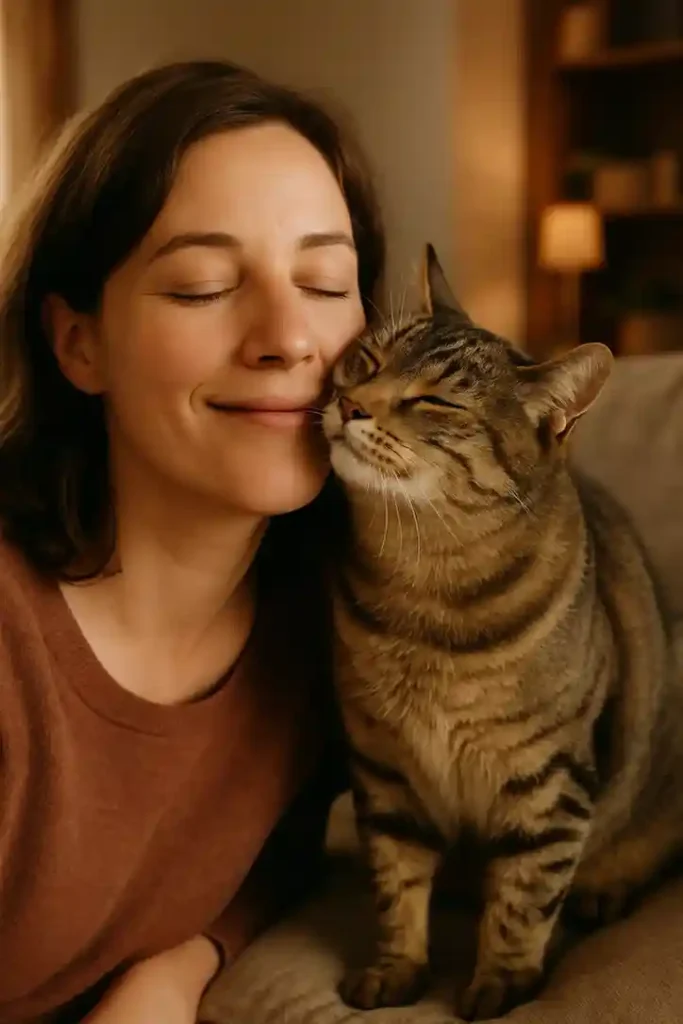
Your cat is not only licking you because they want to show that they love you, but to mark you. Their discreet means of branding you as theirs and as one of the handful. Cats rely on scent to make them feel safe, and they are telling you, you are theirs and they trust you.
You’re Part Of Their Territory
When your cat licks you they may be not only giving you affection, they may be marking you. Cats are also territorial in nature. They mark their territory using scent to give an idea that it is theirs and to warn the trespassers away in the wild.
Scent Is A Cat’s Silent Language
The cats possess scent glands on cheeks, paws and forehead, not directly emitted by a lick, as are rubbing and headbutting, but which are emitted powerfully in support. Their saliva is moist and this mixes with their scent thus forming a shared scent profile.
A Sign Of Security & Trust
When a cat marks you, it is not like they own you in a possessive sense, but about protection. Cats only mark their scent on those people or animals they have great trust. It means that they consider you as one of their inner circle, their preferred clan.
Emotional Comfort In Familiarity
Cats are emotionally attached to scent. Combined with their smells, yours give them a feeling of familiarity that makes them feel rooted. Thus, when your cat licks you after a period of absence, then they are not merely saying hello, they are recreating that reassuring bond.
And when you also have a dog, this post on whether dogs realize we love them is also helpful, and it explores the way in which pups perceive our love.
When It Becomes Excessive
When your cat keeps licking you, and more so after you change your surroundings; such as adopting a new animal or moving the furniture around; that can also be an indication that they are feeling unsafe. They are scent-marking to convince themselves that their worlds have not been lost in any way.
Check Also: Pet Lifespan Predictor
Seeking Attention & Comfort
When your cat rises and licks you, it is his little way of saying, Hey, notice me. Cats are very fast to learn that you pay attention to licking, but you have to react to them with pets or kind words. In addition to seeking attention, it’s also a form of comfort; licking triggers relaxatory endorphins that help them feel safe.
But also, in case you have pets not only cats, but also dogs, you could consider my post about whether dogs know their names, and how you can see how the familiar sounds and words are processed by dogs.
When Licking Says “Notice Me”
The one and only thing your cat licks you sometimes is to get your attention. Cats are subtlety experts, and when subtleties do not work; such as rubbing themselves against your leg or meowing at you; they lick because they are sure of a response.
Comfort Through Connection
Licking plays another role in self-soothing whereby your cat can lick you. When stressed, cats frequently lick themselves as the rhythmic movement transfers calming hormones known as endorphins. They are bringing that comfort ritual into your relationship when they lick you.
After-Stress Reassurance
You have just changed house, had visitors, or experienced a loud environment, then your cat may lick more to adjust. I have also observed how cats can immediately lick their owners immediately they hear thunder, fireworks, or a quarrel; it is their way of trying to get emotional comfort.
Gentle Ways To Respond
When your cat licks you to comfort, this is an indication of great trust. The most appropriate reaction is mild one: talk quietly, pet them, or just sit near them. The same peace helps strengthen the security they are seeking.
Check Also: Is My Pet Bored? Assessment
Tasting Your Skin’s Salt Or Scent
Cats would lick your skin, just because they are curious of your taste and smell. Your sweat salt, lotions, or daily perfumes may pique their interest and they may want to explore through taste.
Curiosity Through Taste
Cats are inherently inquisitive and one of the methods that cats use to know the world is by tasting. When your cat licks your skin it is not a chance, it is an inquiry. Their mouth reads like a detective case and they know who you are, where you have been and even what you have touched.
The Salty Attraction
The faint trace of salt on your skin that you have sweated on attracts cats. And that bit of saltiness they like. Salt is a precious mineral that is sought by animals in the wild. The natural saltiness may attract the taste of your cat and he may lick your hand, arm, or even a leg after you have been active.
Scents That Spark Curiosity
It is not always the salt but the smell. Cats are keen smellers; their senses are 14 times stronger than yours. You have put on lotion, perfume and maybe touched food, your cat will want to taste and know those new smells.
When To Be Cautious
This is fine to lick here and there every now and then, but excessive or obsessive licking may be a sign of obsession or irritation of certain products. Avoid using the creams, oils or perfumes whose components can prove to be toxic to cats.
Check Also: Pet-Friendly Plant Safety Checker
Mimicking Kitten Behavior
When your cat licks you it is a referral back to their kitten age. They were licked by their mother as kittens to get warm, secure and comfortable. When they lick you now, they are reviving such a connection; only this time, you are the one whom they can trust.
Like A Kitten Again
The oldest memories that your cat has of you make it as easy as possible to be licked; those warm days of kittenhood. As kittens are born, they are continually licked by their mother to clean their fur, get them breathing and to make them feel secure.
Emotional Reassurance
This is more likely in cats which are greatly attached to their owners. Licking also allows them to re-unite on an emotional level when they have been stressed or when they have been separated. They are telling them, You are here, I am safe again.
Trust & Vulnerability
She is showing her weakest side when your cat is on your lap, and snugging herself in, and starts to lick you. In the wild, cats never groom when they are unsure of their safety. That lick you therefore is a note of deep trust; a kind of emotional self-giving that is, I feel at home with you.
The Kneading Connection
You may find your cat rubbing and licking you with the paws. It is not a coincidence that the combination is kitten nostalgia. Kittens also knead the belly of their mother in order to produce milk. When grown up, it becomes a calming practice.
Check Also: Pet Sleep Needs Estimator
A Sign Of Stress & Anxiety
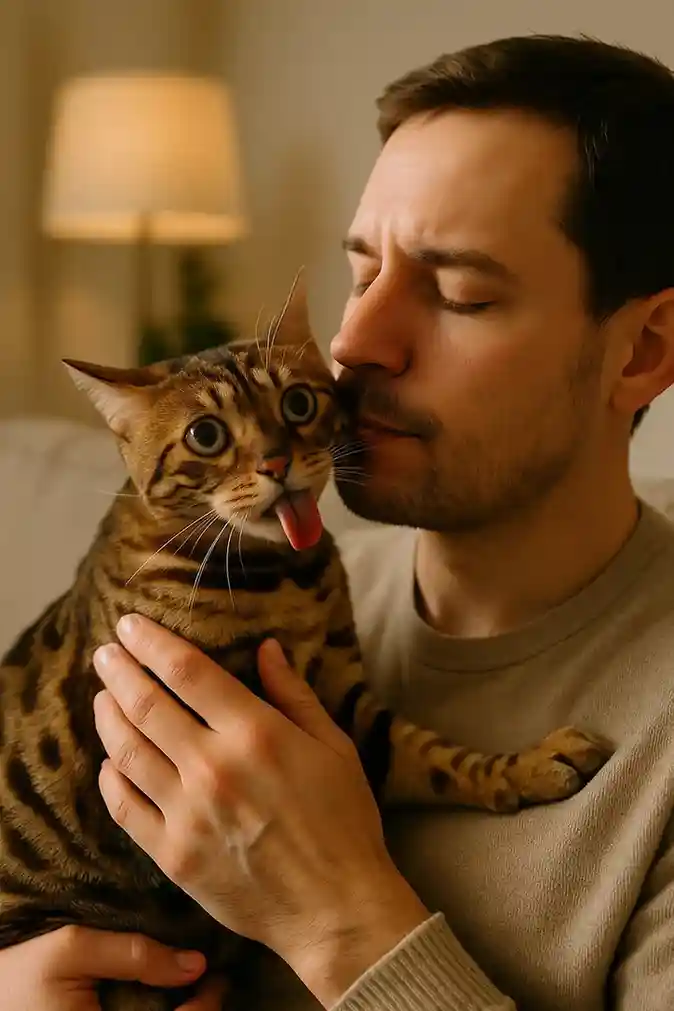
Although cats lick to show love or a bond, in some cases, it is not love that they do it, it is anxiety. When your cat is licking often, violently or near obsessively it may be experiencing some stress.
Licking and kissing are both forms of pets expressing love, so you may also like my post on the topic of whether dogs know what kisses are, in which I break down the way dogs know this behavior.
Stress Shows In Subtle Ways
Cats do not scream to get attention; they express weakness in action. One of their initial stress indicators can be licking. When your cat suddenly starts licking you a lot, in conjunction with fidgeting, scampering or grooming him or herself a lot, it is a coping mechanism.
What Triggers Feline Stress
I have witnessed cats begin to over-lick when houses are changed, a new born, loud events or even minor ones; such as new furniture or a new feeding schedule. Cats crave stability. Their regular rhythm is broken, and licking serves to get rid of tension.
When Your Cat Redirects Licking
At other times, your cat is not only licking yourself, it is licking you. They are saying, I am not fine, however, I believe you will make me feel safe. You may find this at times when you are relaxed; they will feel that they have reached their comfort area.
Check Also: Pet Stress Level Score
When Licking Becomes Too Much
Once the licking of your cat becomes nonstop and not sweet, it may not be mere love. When cats are nervous, bored or want attention, they tend to overly lick. It is their way of finding solace or power.
When It’s Too Much
Few licks are adorable but when your cat just does not give up then it may be more than love. Excessive licking can also signify that one is anxious or bored or requires assurance. What might have been a sign of love may be a coping habit without control.
And in case you appreciate learning about the loving gestures of your cat, then you may also enjoy my new post on why I love my cat so much.
Set Boundaries
One can love the cat, and say no to licking all the time. When they come on, move your hand calmly away, or rise. Use a toy, a treat or a soft pet instead. Consistently, your cat will learn that quiet behavior, not licking; will win your attention.
Check For Problems
The obsession in licking may indicate pain, irritation of the skin or stress to your cat. Note bald spots, restlessness, or constant grooming. When you see any of these symptoms, visit the vet to exclude health complications.
Avoid Encouraging It
Responding by laughing or kissing them can make them believe it is all right. Calm down, do not reward the behavior, instead spend time with your cat when she is at her ease.
Get Expert Help
Unless things improve, a visit to a vet or animal behaviorist. In other cases, a minor shift in environment, play routine or diet can alleviate the urge. The idea is to comprehend the cause of the behavior; not merely to cease it.
Check Also: Pet Pain Signal Quiz (Body & Facial Cues)
FAQs:
Why does my cat lick?
Your cat expresses love, connects with you and is safe because of licking.
Is daily licking normal?
Yes, a bit of daily licking is normal provided that it is not obsessive.
Do cats lick to love?
Yes. Licking is an effective indication of love and trust in cats.
Can licking mean stress?
Yes, over-licking may be an anxiety or emotional stress symptom.
Final Words:
Your cat licks you and this is not some weird thing, this is communication. Love, trust, and comfort are the words of that rough little tongue. Cats lick to connect, brand you as family, and show affection in the only language they understand. It is their way of stating that, You are mine, I feel safe with you. And sweet as licking may be, there is excessive of it. Excessive licking can be a sign of stress or boredom or a health condition.
When you know what the cat is about, and what the cat is doing, you will be relating more to it, and assisting it to remain emotionally stable. Each lick, soft or steady, belongs to your cat’s history with you; a history made of instinct, care, and unofficial affection.