
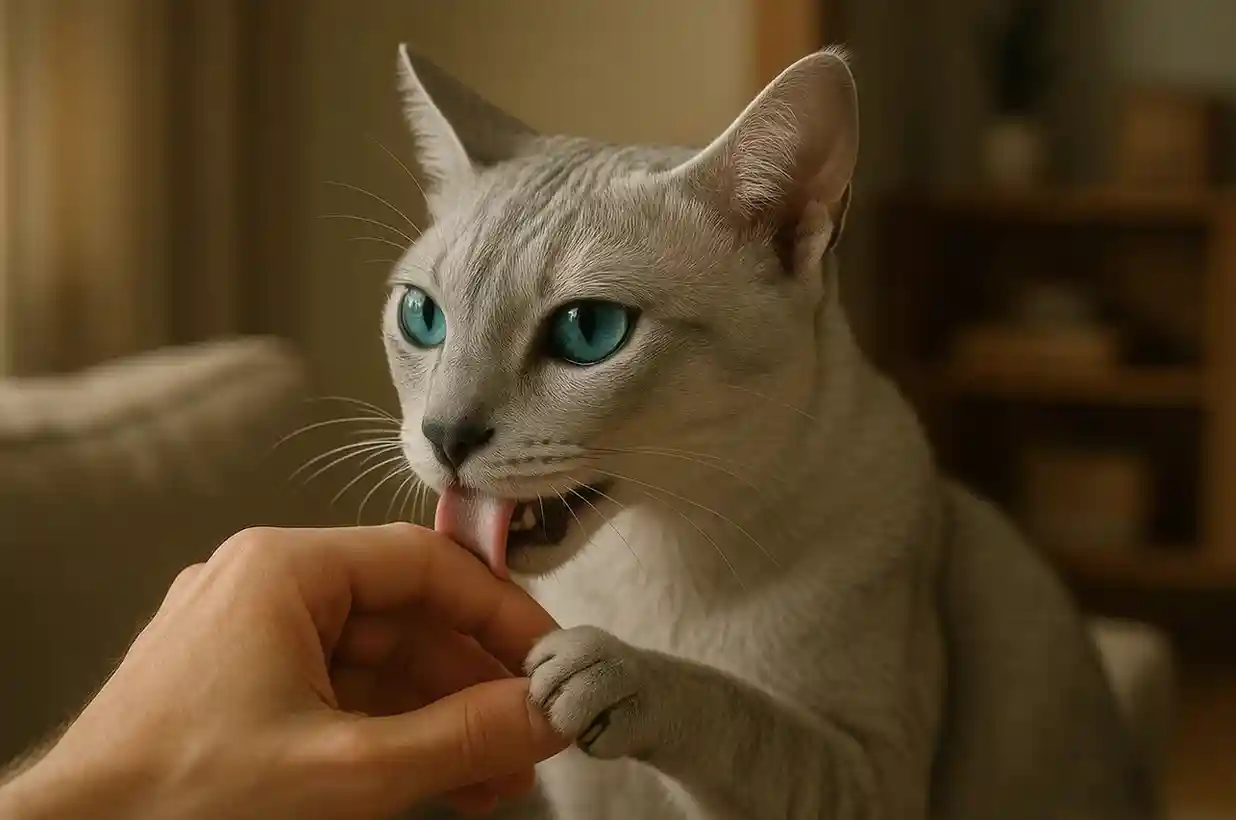
Why then does my cat lick me, and bite me?
It feels disorienting, that slight change of soft tongue to sharp teeth, yet it is not accidental. This combination of biting and affection is one of the more interesting things that cats talk about. It is an instinct, a sensory boundary, emotional expression, and how they push the comfort of the bond they have with you. A cat does not love straight, it speaks in hints, lines, and bursts of trust.
My name is Dr. Elara Vance, an animal behaviorist in the U.S., who has been studying the way cats express their needs, fears, and love over years. I have seen timid cats open up, self-assured cats open their hearts, and owners come to realize just what that lick-then-bite experience is that seems so confusing all the time.
In this blog, I will tell you what I have discovered about the reasons why this behaviour occurs and how you can react in a manner that breeds trust, clarity and a greater connection between you and your cat.
Gentle Nibbles Vs. Real Bites
Some bites feel soft, others feel sharp. Cats use both to express different emotions, and knowing the difference helps you respond calmly. Understanding these signals builds trust and prevents confusion during petting or play.
Gentle Nibbles
Gentle nibbles are soft, controlled bites that never break skin. They are indicative of comfort, bonding and grooming instincts. They are returned by your cat as a sign of love in a more subtle manner imitating what the mother did as a kitten.
Friendly Signals
Friendly bites come with relaxed muscles, slow blinking, and upright ears. Your cat usually stays close afterward instead of retreating. Their overall body posture remains loose, showing the nibble is part of affection rather than irritation or stress.
Aggressive Bites
Bites of aggression are sharp, quick and abrupt. Ears flatten, the body becomes stiff, and the tail can whip. These bites are the results of discomfort, fear or sensorial excess. They are definite indicators that your cat is ready to end the interaction right now.
Early Warnings
Cats offer some minor indications such as twitching tails, dilated eye, skin twitching, or abrupt stillness before attacking an individual. These indicators demonstrate the increasing tension. When you notice them, stopping touch prevents the transition from licking to biting.
Puppy Nipping/Biting Severity Test
Early Life Shaping This Behavior
Your cat’s early experiences create the foundation for how they show affection, set boundaries, and react during touch. The lick-then-bite habit is often rooted in what they learned, or didn’t learn; as a kitten.
Mother’s Training
Groomed kittens learn how to groom themselves, how to manage pressure, and nibble. These lessons at a tender age ensure that they understand how to demonstrate affection without crossing the border.
Early Separation
Cats that are separated prematurely do not receive important socialization. They usually find it difficult to balance licking and biting without the help of siblings. This causes abrupt changes of affection where they are loving next moment to over stimulated the next.
Bottle-Fed Kittens
Bottle fed kittens do not have feline role models and therefore they tend to copy grooming without any limit. They lick intensely, then bite abruptly, not realizing they’re signaling discomfort. Their communication is more instinctive and less refined compared to naturally raised cats.
Read Also: Why Does My Cat Bite Me When I Pet Her
Limited Human Contact
Cats lacking early positive human handling may enjoy petting but reach sensory overload faster. They lick to bond but bite when unsure how to manage repeated touch. Their boundaries are unclear, so they react suddenly even when they trust you.
Check Also: Pet Lifespan Predictor
Sensitive Petting Zones
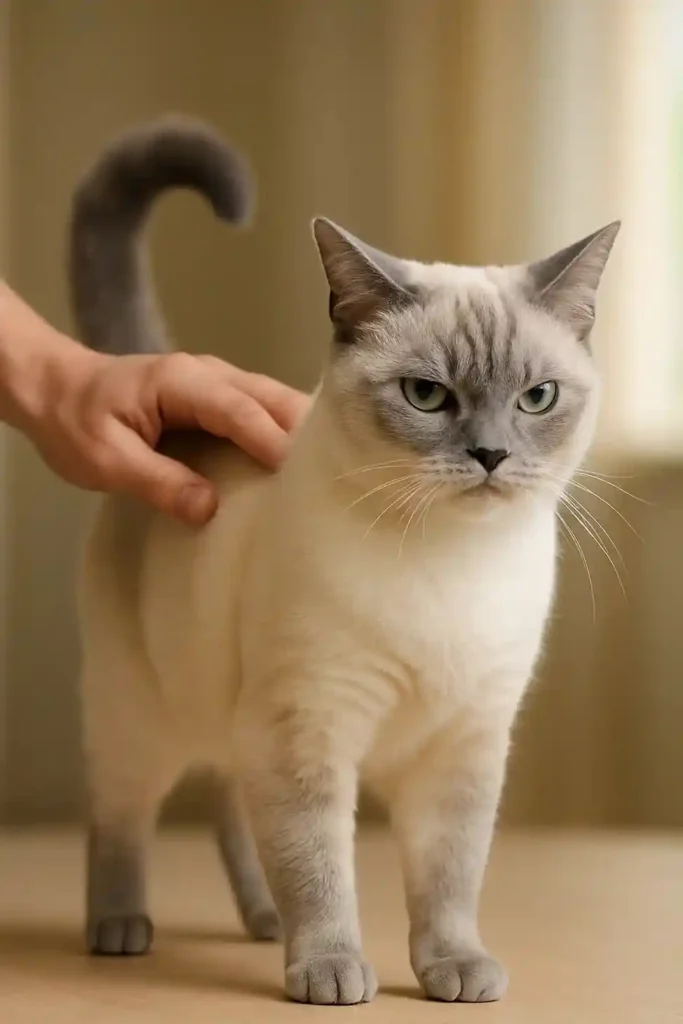
There are places on the body of your cat which will respond better to touch than others do. By rubbing your pet too long or too hard on these areas, your cat will start to lick and then bite you to communicate its pain or overstimulation.
Lower Back Sensitivity
The lower back holds clusters of nerves that activate quickly under touch. Light strokes may feel good at first, but repeated pressure can overwhelm your cat. When this area becomes overstimulated, the lick-then-bite response appears as an automatic way of setting boundaries.
Tail-Base Trigger Point
The base of the tail is a highly reactive area tied to territorial and instinctive behavior. While some cats enjoy brief scratches there, extended petting can switch pleasure into irritation. The bite becomes your cat’s quickest way to stop the stimulation.
Belly As A No-Go Area
The belly of your cat is a naturally secured area that shields important organs. Even mild strokes will result in a defensive reaction. A lick gives you a final warning, and the bite follows when your cat feels exposed or unable to tolerate continued contact.
Read Also: Why Does My Cat Cry At Night
Spine & Nerve Lines
Running your hand repeatedly along the spine may create an intense buildup of sensation. Some cats enjoy short strokes, but long or rapid movements create overload. The quick bite is your cat’s reflexive way of easing the rising discomfort in this nerve-rich pathway.
Check Also: Pet Pain Signal Quiz
Reading Early “Stop” Signals
Cats give warnings before they strike; you simply need to notice. The slight shifts in position, eyes and movement will tell you when your cat is getting over-stimulated and requires the petting session to cease.
Tail Warnings
A slack tail signifies ease, but swings or even quick jerks indicate annoyance growing. When your cat snaps or stiffens at the tail end, it is telling you that the handling is getting too much and a bite is only a short time away.
Ear Shifts
Forward ears show interest, while sideways or tilted-back ears signal growing tension. These small changes mean the petting session has crossed into discomfort. Ear shifts are one of the earliest cues that your cat needs space.
Sudden Freeze
When your cat briefly freezes; still body, focused eyes, slight stiffness; it’s not calmness. It’s hesitation. This moment tells you the touch is edging toward irritation, and your cat is deciding whether to continue or pull away.
Restless Moves
Weight shifting, small posture changes, or pulling slightly away show your cat is becoming uneasy. Restlessness is a gentle request to pause petting. If you miss it, the next step is usually a more direct physical correction.
Check Also: Is My Pet Stressed? Score
Sensory Overload
Even the loving cats may turn to loving you and then they may need to have some space. Their nerves respond quickly, and too much stimulation builds faster than most people realize. This shift isn’t personal; it’s their body asking for a pause.
Why It Happens
The spine and head of the cats contain highly sensitive nerve pathways. The stroking is repeated until it becomes uncomfortable. What begins to be fun soon turns into too much and biting is their quickest method of ending the feeling when they are unable to communicate kindly.
Read Also: Why Does My Cat Twitch In Her Sleep
How It Builds
Sensory overload often develops in subtle stages. A cat relaxes at first, then tension gathers beneath the skin as nerves fire repeatedly. The transition is quick: a twitch of the tail, a sharp stand and an automatic bite, which is expected to prevent a swelling pain.
Early Warning Signs
Cats do not give many signals as they bite and they are hard to detect. Increasing irritation is noted by tail flicking, rotating ears, and skin twitches, dilated pupils, or sudden stillness. These signs will show that your cat is near the sensory limit and it needs the touch to relax.
When To Stop
Stopping early prevents the bite response. Pause petting when your cat starts shifting, looking back at your hand, or tensing its shoulders. Giving them control over the pace and length of affection reduces stress and builds calmer, clearer communication.
Check Also: Pet Health Symptom Checker
Positive Behavior Redirects
Breaking the lick-then-bite habit of your cat is all a matter of timing, cool responses, and providing them with superior outlets to their instincts. Any minor changes in your responses can change the behavior without either of you feeling stressed or confused.
Offer A Toy
When the bite begins, offer a toy immediately. This teaches your cat to direct its natural urge to bite toward something safe. Redirecting in the moment helps break the habit without punishment, confusion, or mixed emotional signals during affection sessions.
Reward Calmness
Whenever your cat wants to be petted without biting, reward the behavior using gifts, praise, or tender loving. Reinforcing the calm behavior teaches your cat what you like.
Stop Before The Bite
When you notice warning signs, stop before the bite. Timely breaking will avoid overstimulation and you will also teach your cat that limits are also observed. This is a good time to establish trust, but will not inflict avoidable frustration or abrupt negative behavior by your pet.
Stay Gentle
When your cat bites do not yell, push or punish him. Extreme reactions strengthen the fear, fear and self-defense. Being able to withdraw your hand calmly, stop interaction, and redirect forms trust rather than hurting it. Your steady reactions create a safer emotional environment for your cat.
Give Space
If your cat does bite, calmly give them a moment alone. This quiet pause allows their nervous system to reset without tension. Over time, they understand that biting ends attention, making the behavior less appealing when they’re seeking connection.
Check Also: Pet-Friendly Plant Safety Checker
Pain & Health-Linked Lick–Bite Behavior

Sometimes this lick-then-bite reaction comes from physical discomfort rather than emotion. When touch triggers pain, cats shift instantly from affection to defense. Being aware of these signs will aid you in early detection of underlying problems and safety of your cat.
Painful Touch
When your cat licks and then bites you when touched in those areas it usually indicates that the area is a sore one. Cats conceal pain well and even little signs of struggling with pressure can indicate underlying physical issues behind their relaxed demeanor.
Skin Irritation
Even simple petting, which is harmless, may become too much when there is allergy, infection, or irritated skin. The lick will be associated, however, the bite is a reaction to the immediate itchiness or stinging which causes your cat to run away upon immediate touch.
Dental Pain
When your cat licks and bites you near their face then they may have some dental problems. Even weak pressure can cause mouth or jaw pain, and the bite is a protective action to prevent aggravation of the vulnerable region.
When To See A Vet
A visit to a vet is valuable when the lick-bite pattern starts suddenly or becomes more frequent. Early intervention reduces the amount of pain, prevents chronic issues and in most situations, your cat could still be petting without his defensive and unpredictable attitude.
Check Also: Pet Dental Disease Risk Quiz
Building A Stronger Bond
It does not happen quickly but rather builds up via relaxed routines, effective communication, and allowing your cat to dictate the speed at which things proceed. Understanding their signals enhances your bond, making it stronger, safer and much more natural.
Understanding Their Style
Every cat has its beat of love; some are playful, some sleepy, and some show their love in little things instead of being constantly connected. After you know how your cat likes to play, you will create an environment where he feels empathized and safe.
Creating Easy Routines
Your cat is comforted by predictability. Brief periods of grooming, soft mornings, and peaceful play develop rituals that they anticipate. These recurrent times make your cat feel grounded, secure and eager to interact with you on a daily basis.
Respecting Their Limits
By respecting the boundaries of your cat, you teach the cat that you will not go too far. Stopping petting before overstimulation, giving space when needed, and allowing quiet time teaches them you’re a safe presence; someone they can trust without hesitation.
Celebrating Their Signals
Cats are appreciative, loving, and bonding in a manner that many individuals ignore. Blinking slowly, leaning softly and purring, sitting close to you are all demonstrations of love. When you recognize these signs, your relationship builds itself and is beautiful.
Check Also: Pet Human Age Converter
FAQs:
Why cats lick then bite?
They show affection first, then signal boundaries when feeling overstimulated or overwhelmed.
Is this real aggression?
No, most lick-bite actions are communication, not true aggression or hostility.
How do I read signals?
Watch for tail flicks, ear turns, body tension, and sudden stillness.
Why licking gets intense?
Strong grooming instincts build stimulation quickly, causing a bite to release tension.
Final Words:
Your cat licks you and then bites you not a confusion, but communication. Their emotional map of how they cope with the world with you is all those little gestures, all those variations in their body language. As soon as you get used to reading those cues, the behavior no longer feels unpredictable but a window into the interior of the cat itself. Knowing their boundaries, valuing their patterns and acting kindly makes a bewildering habit a worthwhile experience.
Being a person who has spent years investigating the emotions of a cat, I can say it with certainty that your cat wants to communicate with you, though in his language. You deal with them on their terms and your affiliation is more relaxed, robust, and straightforward.
3 thoughts on “Why Does My Cat Lick Me Then Bite Me”