

Why does your pet cat bite you?
Cats may be soft, loving and very devoted to you but the next moment they may change and attack the same hand which they were cuddling. And when they stare at you with those inexplicable, illegible eyes, it is as though they are beckoning you in; provided they are not feeling their security threatened. A cat does not respond without a reason, her limits are determined by instinct, feeling and experience.
My name is Dr. Elara Vance, an animal behaviorist who has spent a few years as an employee here in the U.S, researching on cat feelings and the delicate psychology of human-cat relationships. I’ve watched fearful, sensitive cats transform into calm companions once their hidden triggers were finally understood.
In this blog, I will reveal what I have learned about why cats bite when petting them and what their behavior signifies.
Difference Between Love Bites & Real Bites
Some bites feel playful while others feel sharp and sudden, and understanding this difference helps you connect better with your cat. Each type comes from a different emotional state, so learning their meaning prevents confusion, fear, and unnecessary hurt during affection.
Soft Love Bites
Love bites are gentle signals your cat uses to tell you she’s comfortable but reaching her limit. They feel light, never break the skin, and often appear during relaxed moments. These soft nibbles express affection mixed with boundary-setting, not aggression or distress.
True Aggressive Bites
Real bites are better and abrupt and are obviously painful. When she is overwhelmed, or trapped, or threatened, your cat uses them. These bites are usually accompanied by stiffness, squinting of the eyes or hasty retreating afterward.
How To Tell The Difference
You can tell which bite you’re dealing with by watching body language before the bite happens. Relaxed ears, slow blinks, and a loose tail signal love bites. Tense whiskers, flicking tails, and stiff muscles point to genuine irritation or discomfort.
Puppy Nipping/Biting Severity Test
Overstimulation During Petting
Some cats enjoy touch only briefly, and their nerves overwhelm faster than you expect. When petting continues past their comfort point, the pleasant feeling shifts into irritation, and your cat may bite to stop the sensation instantly.
Fast Sensory Overload
Cats have extremely sensitive skin filled with active nerve endings. What initially started as comfort may soon escalate to something too much. When this stimulation exceeds their personal threshold, they automatically bite to promptly stop the stimulus.
Warning Signs Appear First
A bite rarely comes without signals. Discomfort is built up in tail flicks, twitching skin, stiff muscles, or turning ears. When you miss these signals, your cat will make one last, unmistakable gesture by biting you as she wants the petting to end.
Petting Style Matters
Still strokes, repetitions, or hard strokes may overpower the nerves of your cat. Even kind passion becomes disagreeable when the beat is too forceful. The instinct to bite when the contact becomes irritating instead of soothing dictates the behavior of your cat.
Read Also: Why Does My Cat Twitch In Her Sleep
Avoiding Overload Bites
Make petting short and slow and provide breaks to allow your cat to make her choices. Light pressure and conscious strokes alleviate stress. You change your tactics towards her cues and she will remain calm and much less likely to retaliate by biting.
Check Also: Is My Pet Stressed? Score
Petting-Induced Aggression
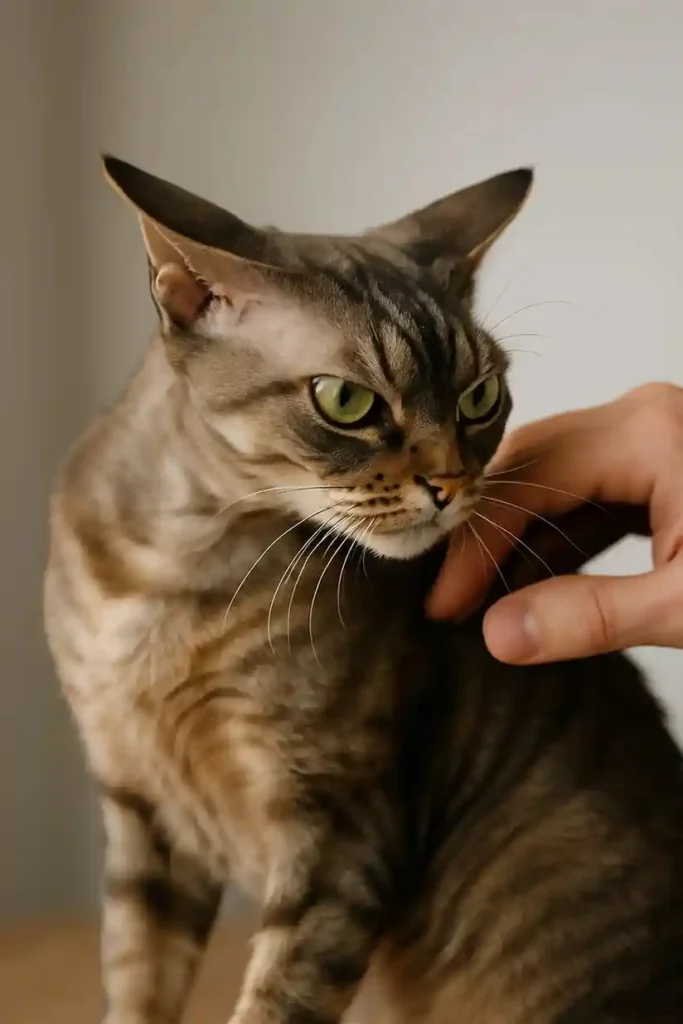
Others can only take affection a little more and then it gets too much. When the emotion changes to frustrating, their response might appear to be abrupt. It is an instinct, which is associated with delicateness, boundaries and the need to control touch.
Sudden Sensory Shift
Then there are cats that make it to the end. Skin and nerves are extremely sensitive and strokes can get uncomfortable. The feeling is uncontrollable, and in this case, it is hard to resist the urge to bite, not because he or she wants to attack you but rather because of the pain.
Feeling Out Of Control
Cats prefer controlling contact. When petting continues longer than they want, they may feel trapped or overstimulated. A bite becomes their way to reclaim space and end the interaction. It’s an act of establishing boundaries not dismissing your love.
Low Emotional Threshold
Cats can jump from enjoying touch to rejecting it within seconds. Their emotional tolerance depends on mood, environment, and stress levels. When that threshold is crossed, biting becomes a communication tool; a quick message that they’ve had enough stimulation.
Sensitivity To Touch Type
The way you pet matters. Quick, repeated, or heavy strokes may aggravate your cat more than you think. Even affectionate touch can overreact to them. The bite becomes their request for you to slow down, soften pressure, or change where you’re touching.
Check Also: Pet Pain Signal Quiz
Sensitive Areas To Avoid
Some parts of your cat’s body react faster and more strongly to touch than others. These zones carry higher nerve sensitivity, emotional significance, or instinctive protection signals. Understanding where not to touch helps you prevent sudden bites and keep your cat comfortable.
Belly Sensitivity
Her belly is the most susceptible part of the body, and it has organs, which she protects instinctively. It does not always mean inviting to touch even when she rolls over. Soft strokes here often feel threatening, triggering defensive biting meant to guard her core.
Tail & Tail Base
The tail is filled with very sensitive nerves. Stroking or petting too close to its bottom may over stimulate your cat and produce the opposite effect of affection, pain. Many cats react with sudden biting because they can’t tolerate the intense sensation in that area.
Paws & Legs
Cats guard their paws due to the fact that they use it to balance, climb, and to hunt. The feeling of their feet or legs is usually invasive and unpredictable. Even good cats can nip at you to remind you that they do not like being that closely involved.
Back Near The Spine
Stroking along the spine, especially toward the lower back, can trigger sensory overload. This region has concentrated nerve endings that can become irritated fast. A cat may enjoy the first few strokes but bite suddenly when the sensation shifts from pleasant to overwhelming.
Check Also: Cat Litter Box Setup Score
Mixed Signals During Petting
Sometimes your cat bites because she mistakes your gentle touch for play. A small movement or shift in energy can activate her natural hunting instincts before you even realize the interaction has changed.
Quick Movements
Cats react fast to sudden hand motions. A slight change in direction or pace can make your hand look like prey. This instinctive trigger can shift a calm petting moment into an unexpected play-bite within seconds.
Read Also: Why Does My Cat Cry At Night
Hand As A Toy
Your cat might consider your hand something to run or to grab when she is alert or excited. It is not aggression, it is instinct. Play and affection can blend together easily, causing quick nibbles during what you intended as gentle petting.
High Energy
If your cat is already energized, she’s more likely to misread your petting. Even slow strokes can spark hunting instincts when she’s mentally “charged.” This heightened state makes playful biting more common and often sudden.
Play Vs. Aggression
Play-biting usually appears dramatic but this is far otherwise with actual aggression. Since your cat is playing out the normal play cycles she may kick, grab or nibble your hand, but no she is not trying to hurt you or express anger.
Check Also: Is My Pet a Healthy Weight? Quiz
Redirected Aggression During Petting
Sometimes your cat bites you during petting because she’s reacting to something else entirely. The bite is not about you, it is her sudden stress being spent on an outside stimulus that she is powerless to control.
Sudden Triggers
Redirected aggression starts when your cat gets startled by sounds, scents, or fast movements. She feels a spike of tension, can’t locate the threat, and releases that energy on you during petting. It’s instinctual, not intentional harm.
Hidden Causes
Some triggers are so subtle you barely notice them; another cat outside, a strange odor, or a quick shadow. Your cat reacts instantly, and the bite becomes a fast protective reflex, not a planned response against your touch.
Give Her Space
If she tenses up or suddenly scans the room mid-petting, pause immediately. Step back and let her decompress. A few minutes of quiet helps her body settle, preventing the redirected bite and restoring her internal sense of safety.
Prevent Stress
Reducing unpredictable triggers lowers redirected aggression. Minimize outside distractions, do not pet her during yelling times and provide her with high resting spaces. Once she feels safe in her environment, her responses are less nervous and much less reactive.
Check Also: Pet Health Symptom Checker
Hidden Pain Or Medical Issues

Your cat bites sometimes because she is not irritated, but because the body is in pain. She is fast to respond to touch stimuli, which causes discomfort. These pain-based bites are signals that something deeper is happening beneath the surface.
Joint Or Muscle Pain
Gentle petting may be sharp and unpleasant with arthritis, strained muscles or sensitivity of the spine. Once the pressure reaches an irritable area, your cat will bite to end the experience. This is more evident in old cats by flinching, stiffness or refusing contact altogether.
Skin Irritation
The skin is very sensitive to the such conditions as allergies, dermatitis, flea bites, or fungal infections. Irritated spots may hurt or be swollen when you pet your cat. Your cat bites just to put some space between itself and the pain, not because it is aggressive or angry.
Dental Discomfort
In case of a dental disease or pain in the mouth, the pain spreads over the head and neck in a cat. A slight touch by the face can cause a retaliatory bite. Cats tend to conceal dental issues, and acute sensitivity is a hint to a more severe problem.
Hidden Internal Pain
Problems such as stomach unease, bladder pain, or internal swelling can render regular management intolerable. Your cat can bite when petting causes strain on a sore body part. Cats conceal sickness and therefore sudden biting can be a warning that the cat is sick.
When To Get A Vet Check
A vet visit is necessary when the biting begins abruptly or regularly during petting. Note whether flinching, avoidance of contact, limping, low energy or vocalizing occurs when touched. Early assessment will assist in detecting latent pain before the situation deteriorates.
Check Also: Pet Allergy Symptom Quiz
Petting Your Cat The Right Way
Playing with your cat is most effective when you align your comfort, rhythm, and limits. When you learn how she signals, all the touches will be more comfortable, secure and not so painful to both of you.
Let Her Lead
Cats will feel safer as they are in charge of the beginning and the end of petting. Let her come up, select the position and move freely. Once she has such an option, she remains calm and much less prone to sudden biting.
Use Safe Zones
The most favorite parts are cheeks, chin, forehead and high back. These positions trigger familiarity and attachment. Do not touch tender areas so as not to over stimulate and cause the moment to shift towards irritation or defensive response which results in biting.
Keep It Short
Short, gentle petting sessions prevent sensory overload. Cats are fast processors of touch, and long strokes may sink them. The pauses usually leave her room to indicate whether she wants more or needs a stop to avoid sudden mood changes or biting.
Read Her Signals
Early warnings are fidgety tails, stiff bodies, shaky skin, and moving ears. When you see them stop. By observing these signs you demonstrate to your cat that she is safe, and thus, it becomes easier to avoid those fast and unpredictable bites caused by unease or annoyance.
Check Also: Pet-Friendly Plant Safety Checker
FAQs:
Why does my cat bite?
Usually overstimulation, discomfort, or unclear social boundaries during petting moments.
Is my cat being aggressive?
Not always; most petting bites come from sensitivity, not true aggression.
Do love bites hurt?
They’re gentle nips meant as communication, not intended to cause pain.
How do I stop bites?
Watch early signals, limit petting time, and avoid sensitive body areas.
Final Words:
It is not only about correcting a behavior, but it is also about eventually learning the language of your cat who bites when you pet her. You read her signals, respect her limits, alter your touch and you change the whole emotional climate between the two of you. What was once seen as random or painful is a gateway to more trustful, less tense interactions and a relationship that is stronger than ever.
You are not attempting to lead your cat around but rather to relate with her. And when you do not see her limits as her problem, but rather as her personality, she treats you with greater gentleness, ease, and love.
3 thoughts on “Why Does My Cat Bite Me When I Pet Her”