
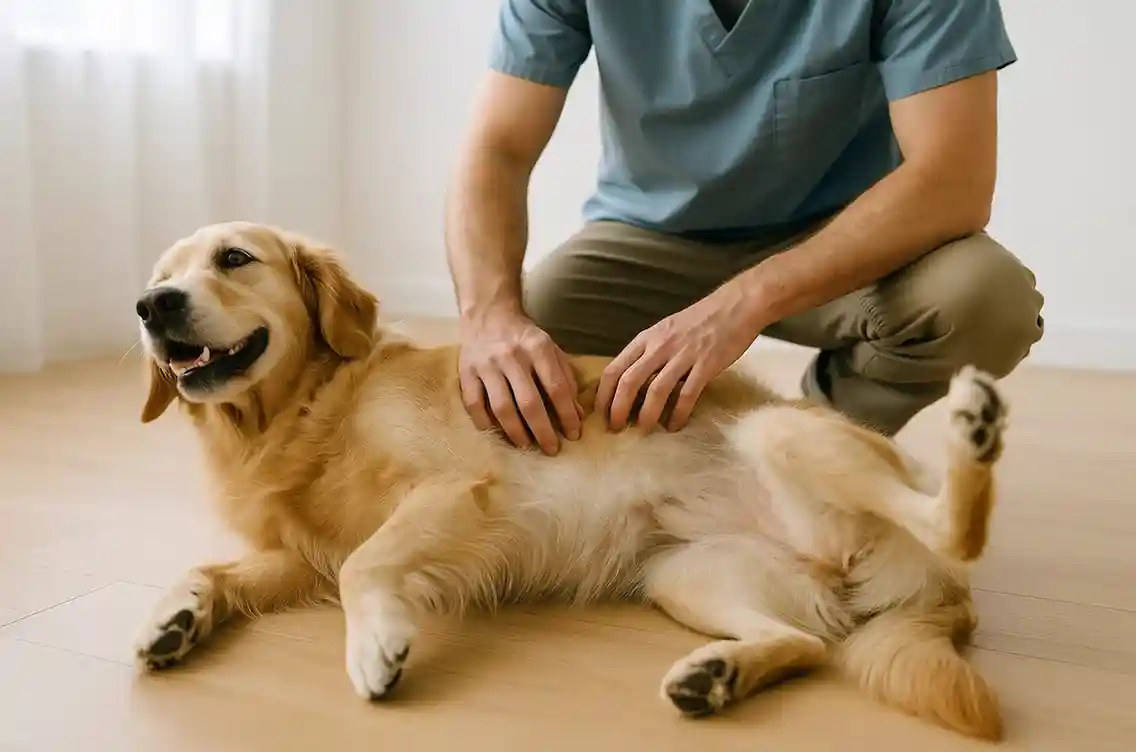
Why does the leg of my dog begin twitching as I rub his belly?
That lightning kick is no accident, it is referred to as the scratch reflex and it is an intrinsic response inbuilt in the nervous system of your dog. When you scratch a sensitive place such as the belly or side, you excite small nerve endings beneath the skin. The nerves directly relay a message to the spinal cord, which immediately causes the muscles of the hind leg to act.
My name is Dr. Elara Vance, an American citizen, lifelong veterinarian, and countless hours studying canine behavior and body reactions. I’ve seen thousands of dogs display this exact reflex in different ways; sometimes playful, sometimes protective, sometimes revealing something deeper about their comfort and health.
In this blog, I’ll explain exactly why dogs kick their legs when you scratch them, what it says about their bodies, and how you can understand them better through this fascinating reflex.
How The Scratch Reflex Works
Ever wondered why that one belly spot makes your dog’s leg go wild? It all comes down to the scratch reflex; a built-in nerve response that happens without your dog even thinking about it. This reflex is an automatic body reaction designed to protect them from irritation or touch.
The Nerve Chain Reaction
You scratch your dog belly or side, and you are exciting groups of certain nerves under the skin. These nerves are fast to reach the spinal cord to inform it that something is touching or tickling that part.
Why It’s Automatic
Here’s the cool part: the brain doesn’t even need to get involved. This is called a spinal reflex arc, meaning the whole process happens between the skin, nerves, and spinal cord.
An Evolutionary Safety Mechanism
In the wild, that reflex helped dogs defend themselves against parasites, sharp plants, or crawling insects. The sudden kick helped shake off the problem before it became a bite or sting. Even though your modern pup lives indoors, their nervous system still carries that ancient defense mechanism.
Check Also: Pet Health Symptom Checker
Why The Belly Triggers The Kick
If you’ve ever noticed that your dog’s leg goes wild when you scratch their belly or side, that’s not a coincidence; those spots are loaded with nerve endings that make them extra sensitive. When you touch or scratch there, the nerves instantly send signals to the spinal cord, activating that quick leg movement.
Nerve-Rich Areas
A large number of sensory receptors, minute nerve cells that are capable of feeling the lightest touch or irritation, are found on the belly, ribs, and flanks. These receptors are nearer to the surface since there the skin is thinner and therefore the whole body of your dog is more sensitive to every type of touch.
Instinct From The Wild
This sensitivity goes back to your dog’s ancestors. In the wild, insects and ticks often attached themselves to the soft belly and sides, where fur was sparse. The reflex helped them react fast kicking or twitching to shake pests off before they could bite deeper.
Comfort & Vulnerability
Despite being a “defense zone,” the belly is also where dogs show trust and affection. When you roll your dog and scratch that part, you are upon one of their most exposed spots.
Pet-Friendly Plant Safety Checker
How The Reflex Helps Dogs In Nature

Even though your dog now lives in comfort, the leg-kicking reflex comes straight from their wild ancestors. This automatic movement once played a vital part in survival, long before humans ever scratched a belly.
Built-In Defense
In the wild, wild dogs and wolves were always annoyed by insects, thorns and crawling parasites. The scratch reflex was an emergency defense mechanism; when an object touched a vulnerable part, it was kicked away to shake off quickly.
Fast Reaction System
The reflex is so quick, as it does not require the brain. The sensory nerves send a signal to the spinal cord that sends a signal to the leg muscles. This directness was such that wild dogs never had to reason out the danger before acting on that uneasiness.
Survival Advantage
This automatic movement became part of their toolkit of evolution over time. It shielded them against infection, decreased irritation and kept their skin healthy. Although your dog would no longer need to concern itself with living in the wild, such a reflex is still there.
Modern Meaning
Now, when your dog kicks with a leg in a scratch, it is a harmless echo of an ancient behavior. It is their body that recalls things it once required to be alive and now they appear as an amusing, cute thing that links them to their wild history.
Check Also: Pet Lifespan Predictor
Why Dogs Kick Even When They’re Relaxed
Even when your dog is stretched out on the couch, eyes half-closed, that famous leg twitch can still appear the moment you hit the right spot. The reason is simple the scratch reflex doesn’t need the brain’s permission.
Built-In Instinct
This reflex is ancient. Wild canines used it to brush off insects or irritants quickly, even while resting. That instinct still lives in your dog’s nervous system today, which is why you see the kick even during nap time.
Sign Of Trust
A dog rolling over, allowing you to scratch their belly is a sign of great comfort and safety. Lying bare is a naked gesture; it means they are comfortable with you. Then as the leg begins to kick it is not irritation; it is their body reflex coupled with their trust of you.
Comfort Vs. Overstimulation
In some cases excessive scratching may over stimulate the nerves and cause a stronger reflex or even a bit uncomfortable. When your dog is going or rather tensing, this is an indication to relax. When they relax, lean into your hand, and perhaps sigh, you have the ideal equilibrium between enjoyment and reflex.
Check Also: Pet Sleep Needs Estimator
When The Reflex Becomes Too Strong
A funny leg kick may become alarming at times. When the scratch reflex of your dog appears to be too sensitive or is occurring too often, then this could be a sign of what is going on in his body.
Common Causes
When dogs are scratched, they kick because of skin problems, nerve sensitivity, and infection irritation. Their response to a repeated scratching, even in a single area, can increase their reflexes.
What To Watch For
Watch out such indications as being able to scratch all the time, twitching even without being touched, or yelping when touched. These can be your dog reflexing as irritation or pain instead of comfort.
What You Can Do
Should your dog reaction appear to be too strong, cease scratching and examine their skin, looking whether it is red, bumped, or sore. Irritation may be soothed with a gentle bath using dog-safe shampoo. When the problem persists, it is better to see your vet to exclude skin infections, allergies, or nerve related.
Check Also: Dog Joint Supplement Dosage Calculator
Decoding Your Dog’s Body Language
It is not a funny reflex when your dog begins kicking you with his leg: it is a kind of communication. Dogs tell it all with their body language and the twitch of that leg is just one of the messages. You must observe the posture, facial expressions and the behavior of your dog to really know how the dog is feeling.
More so than leg-kicking when belly rubbing, there are other things dogs do that confuse their owners like why they roll on the dead. Incase you are wondering about that instinct, I have elaborated on it here.
Signs They’re Loving It
The body language of your dog is open and relaxed when he loves your scratching. You will read a gentle shake of tail or loose, wiggly form as they lean to touch you. their eyes may become tender or half-shut, and there may be now and then a muffled sigh or low groan; the dog-king sound of universal bliss.
Signs They’ve Had Enough
Not every kick means happiness. At other times the reflex may be excessive or irritating like when the skin of your dog is sensitive or when you are scratching an irritated part. When you see their ears flatten, their tails go stiff, and their bodies become tensed, it is time to relax.
Check Also: Dog Separation Anxiety Score
Why Some Dogs Don’t Kick At All
Dogs do not all react with that funny kick of the leg when you scratch them and that is not unusual. Dogs like individuals possess varying levels of sensitivity, nerve reactions and comfort zones.
Different Nerve Sensitivity
Each dog’s body processes touch differently. Others possess more attentive nerve endings in their belly or sides and others have thicker skin or thicker fur which makes the sense less acute. This variation is why one dog may start kicking instantly, while another stays still and relaxed.
Breed & Body Differences
Some breeds are particularly more reflexive such as those with short hair or lean bodies since the skin and nerves are more exposed. Breeds that are warmer or rather more fat tend to have a milder reaction. It is not something emotional but physical.
Age & Health Factors
Aging dogs or post-injury dogs can have diminished nerve activity. Nerve sensitivity also diminishes a bit with age and you may also find that the kicking reflex decreases with age. In the same way, dogs with prior trauma to the abdomen may not submit to belly rubs at all.
Emotional & Trust Levels
Other dogs tend to be more protective or watchful of their belly it is a natural result as it is a vulnerable place. Unless your dog is easy to roll over, or display their reflex, then it may be an indication that they need more time to feel safe.
Check Also: Breed Temperament Matcher
Safe & Comfortable Dog Scratching
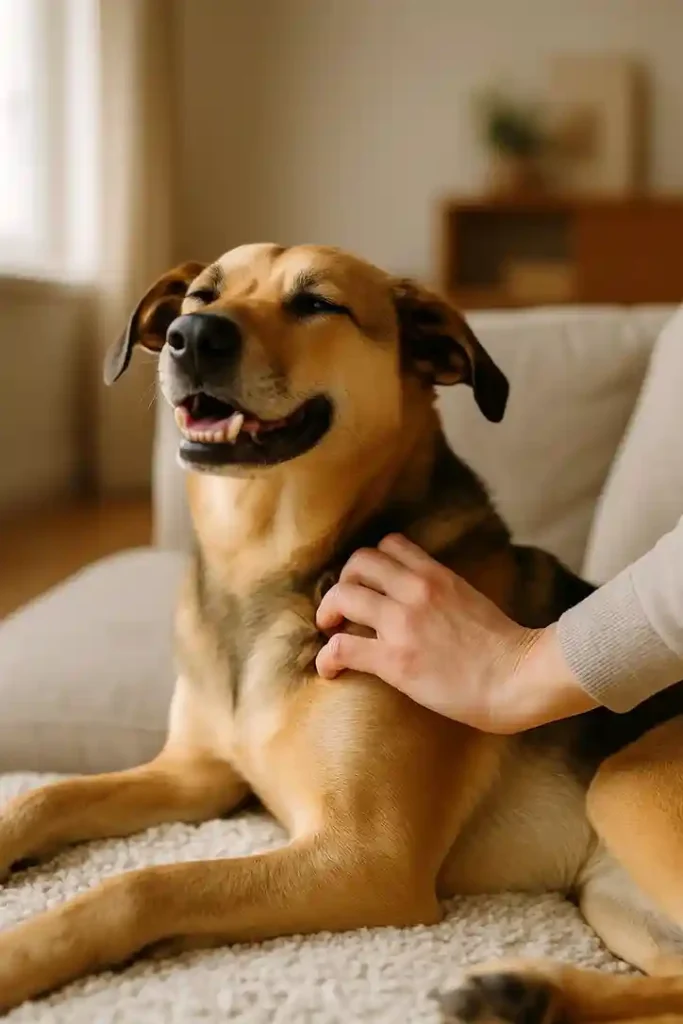
It may sound easy to scratch your dog, yet it can make the difference between feeling comfortable and being irritated. Not only does a good scratch feel fantastic to your dog but also, it also fosters trust and bonds you on a new level.
Start Gently
It is always best to start out light. Keep your nails out and use the ends of your fingers and work in little circles. This will help in calming you dog and will also enable you to know how they are coping with the pressure. When they lean or sigh, you are doing it well.
Watch Their Reactions
The body language of your dog will tell all. They are loving it with a wagging tail, closed eyes or leaning closer. However, when they draw away, stiff or lick the region too much, then stop. Their way of saying, too much.
Read Also: Why Do Dogs Lick Each Others Ears
Avoid Sensitive Areas
Do not use tender or inflamed areas such as belly button area, underarms or where redness or bumps can be seen. Over scratching of such parts can be irritating to the skin or even painful, especially to short haired breeds.
Keep It Clean & Calm
Always scratch when your hands are dirty, dogs can have open scratches or small scratches and these can be infected. A quiet atmosphere works, too; scratching during little times of silence creates relation and comfort.
Check While You Scratch
Make scratching a fast health check. As long as your dog is enjoying the moment, feel along any lumps, bumps, ticks, or dry areas. It is a simple method of seeing signs of skin or health problems early and leaving them at ease.
Know When To Stop
You see your dog start to change its spots, or yawn, or walk away, and then they are kindly telling you that enough is enough. Always heed that sign; trust is gained when you hear to their limits.
Check Also: Puppy Proofing Safety Checklist Tool
When To Visit The Vet
That cute leg kick when scratching the belly is alright sometimes but not always. Sometimes it may be the way that your dog expresses discomfort or indicates some underlying problem that must be addressed.
Signs You Shouldn’t Ignore
The first red flag is when your dog is kicking its own or more than normal. Recurrent leg twitching, particularly when they are not being touched, may be a signal of nerve irritation or muscle spasms. Itchy, red, or swollen skin may well indicate allergies, bites of fleas or other skin infections.
What The Vet Will Check
When you take your dog to the doctor they will begin by examining him physically including skin irritation, dryness, and any evidence of parasites such as fleas or ticks. They can also subtly check the nerve sensitivity by rubbing a particular area and noting the reaction.
Why Early Checks Matter
Early check-up of your dog can save everything. The problem that caused an excessive reflex is mild in most cases such as allergies, dry skin, temporary irritation and when ignored may lead to long term discomfort or even nerve damage. A vet check will make sure that a funny little kick is not disguising something more important.
Check Also: Pet Insurance Worth Calculator
FAQs:
Why do dogs kick?
It is a reflex of the nerves reacting to a touch when scratching.
Is kicking behavior normal?
Yes, it is all natural and it is normally harmless to most dogs.
Read Also: Why Do Dogs Lick Each Others Mouths
Should I stop scratching?
When your dog looks uncomfortable or begins to move.
Do all dogs kick?
Majority do but sensitivity and reflex strength is different in different dogs.
Final Words:
It is no mere trivia that dogs kick at you when you scratch their legs, it is actually familiarity with the way their bodies and instincts operate. And that little spasm of their legs is natural to their system of reflexes, and how finely the nerves are attuned. They do not have control in their body and are automatic, and most of the time it is quite normal. Nonetheless, as a person who cares much about the comfort of dogs, I always claim: pay attention.
When the kicking evolves into scratching, biting, or pain, it may indicate an underlying problem such as skin irritation, allergies or a simple infection. But in the majority of instances it is just a funny, lovable, way of your dog saying, That’s the spot!
3 thoughts on “Why Do Dogs Kick Their Legs When You Scratch Them”