
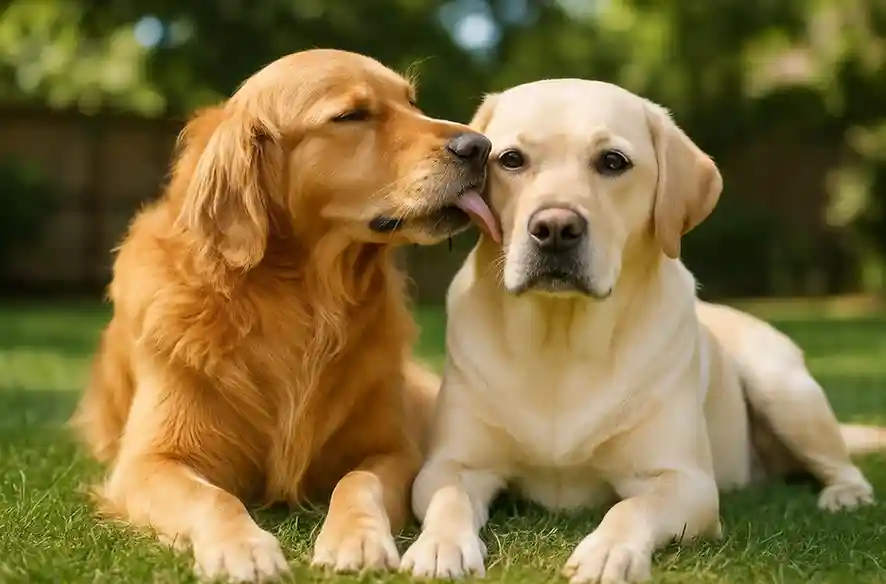
Why are dogs like that, licking each other?
It may seem to you peculiar enough, yet it is a normal and significant thing to them. This little act has a lot of communication, affection, trust, grooming and even emotional comforts. The fastest method of bonding, showing respect or even comforting one another during stressful times is what appears strange to us.
My name is Dr. Elara Vance, a U.S. based veterinarian and life-long researcher on dog behavior. I have over the years observed a lot of dogs mingling and this kind of behavior invariably tells us a lot about the instincts and the emotional intelligence of a dog.
In this blog, I will make you realize why dogs lick other dogs ears, how this reflects in their relationships, and when you may have to intervene as a responsible owner.
Social Bonding & Affection
Dogs do not just lick the ears of each other but this is an act of love and attachment. This little gesture creates trust, enhances their friendship and maintains peace in the midst of their small pack. It is a language of emotions which implies, You are significant to me.
Read Also: Why Do Dogs Lick Each Others Mouths
Building Trust
The dog licking the ears of another is not an act of mere affection, but one of very great trust. Physical proximity is an issue in a dog world. Allowing another dog to be that near such a sensitive place implies, I place my trust in you.
Strengthening Friendship
I have observed that dogs which co-exist tend to establish non-verbal routines, they eat together, sleep together and even lick each other’s ears. It is how they keep the peace and assure their connection. These gentle gestures help avoid conflict and create emotional security in their pack life.
Emotional Connection
Dogs release endorphins when they lick and this is the same hormone that humans feel when they embrace or share a touching moment. It is a source of calmness, joy and harmony. Seeing your dog licking someone else ears, you are observing their show of affection, silent, immediate and full of sense.
Read Also: Why Does My Cat Follow Me To The Bathroom
Maintaining Pack Harmony
In nature, dogs thrive in structured social groups. Acts like ear licking help maintain order and strengthen group unity. It’s not just love; it’s loyalty. Each little lick strengthens the balance which holds their little pack emotionally stable and bonded.
Check Also: Pet Human Age Converter
Grooming Instinct & Hygiene Care
As a grooming behavior, dogs tend to lick the ears of the other dog. It is their means of assisted cleaning of hard to reach spots, demonstrating caring and trust. It is their pack instincts that cause this behavior to keep each other clean and keeps the group healthy and connected.
Natural Cleaners By Instinct
Dogs are innately well behaved animals. They speak their tongues not only to love but also to cleanliness. When they fail to access some of the areas such as their ears; they have a trusted companion to assist.
Helping Each Other Stay Fresh
Licking another dog on the ears is not so much about love but about cooperation. The tongue cleaning helps get rid of dirt, dust and excess wax in the ear. This they do in common with their wild ancestors who used group grooming to keep clean and healthy in the pack.
More Than Just Cleaning
This act goes beyond hygiene. It is a little show of affection and bonding. I used to watch dogs sitting at ease with their friend cleaning their ears; this is an action of trust. The licked one calms down, indicating that it is safe enough to allow another to come this close to an exposed part.
Dog Walk Length/Time Calculator
Scent Communication & Behavioral Reading
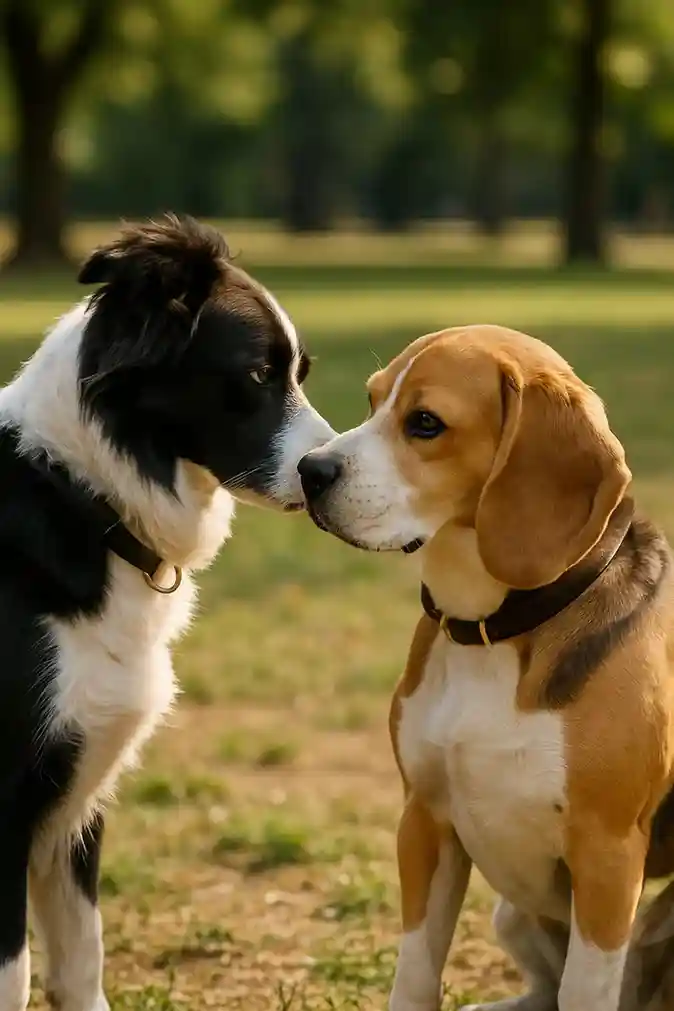
The primary mode of perception used by dogs is through scent, and that is the reason they lick each other in the ear. It assists them in learning the mood, health, and feelings of another dog.
Reading Through Smell
Dogs exist in a scent controlled world. It is not mere affection, when one dog licks the ears of another, but rather information gathering. Their noses and tongues act as scanners, detecting pheromones, a scent of chemicals that reveal to them the mood of the other dog, his health and even his or her diet.
Emotional Check-Ins
When I observe dogs lick each other ears in quiet situations it is usually a silent emotional check-in. They are assuring that all is well in their pack. This indirect communication is what preserves the social balance and makes the dogs emotionally balanced among each other.
Read Also: Why Does My Cat Headbutt Me
Understanding Social Roles
Ear licking can also say something about rank and respect. Within groups, junior dogs even lick the ears of the seniors as a sign of peace, rather than being afraid, but recognizing their status. That is the way they keep order and observe limits in a natural order.
Silent Bonding Language
I have always been intrigued by the fact that a seemingly simple gesture of grooming is a nonverbal communication. It is not vocal, more profound, expressing sympathy, interest and insight simultaneously. This type of body language reminds me that dogs do not simply hear one another.
Check Also: Which Dog Breed is Right for My Lifestyle? Quiz
Showing Submission Or Respect
When a dog licks another ear, it is usually a silent expression of respect. They are saying, I trust you or I follow my your lead. This little, tender gesture keeps the social circle peaceful and bonds the relationships by understanding calm, nonverbal.
Peaceful Gesture Of Respect
Dogs are pack animals, submission is not being scared but being equal and respectful. When a dog licks another dogs ears, it shows that it has accepted the superior social status of the other dog. It maintains the peace and minimizes the risks of war.
How Dogs Avoid Tension
In multi-dog homes, small acts like ear licking work as peace offerings. A younger or timid dog will lick the ears of an older one after rough play as though to say, We are good. Such a submissive behavior will convince both dogs that all is well and can restore order in the group.
Pack Harmony & Understanding
I’ve seen this behavior countless times in rescue groups and shelters, where dogs are constantly forming new bonds. One lick on the ear will resolve disputes and create trust. It is a kind of nonverbal communication, which states, I respect you, without a yell or a growl.
Check Also: Is My Pet Stressed? Score
Anxiety Relief & Comforting Behavior
To release tension, dogs tend to lick their ears to offer emotional support. This soothing gesture aids in dispensing soothing chemicals, eliminating stress to both dogs. It will be commonplace following noisy events or stressful situations, a basic, natural act which provides comfort and togetherness between them.
Natural Stress Soothers
Dogs do not talk, thus they use touch and little gestures to console each other. When licking, particularly around the sensitive parts of the body such as the ears, they produce endorphins which are natural chemicals that make them feel secure and serene.
Calming Each Other Down
This can occur after an episode of stress, such as the noisy fireworks, a thunder storm or a visit to the vet. A dog, of course, licks a dog, and soothes it as you can nuzzle or cuddle up against you when you are scared. It is not habit only, but emotional consciousness.
Emotional Support Through Touch
Licking acts as emotional reassurance. It tells the other dog, “You’re not alone.” For some dogs, giving comfort can even ease their own stress. It’s a mutual healing mechanism, both dogs feel more connected and secure afterward.
When It Becomes Excessive
Although this behavior is healthy in small amounts, licking all the time may be a warning. When a dog is too focused on the other ears, then it may be an indicator of anxiety or even become compulsive.
Check Also: Dog Separation Anxiety Score
Taste & Natural Curiosity
Dogs have a sense of taste and smell and at times that includes licking the ear of another dog. The salty taste of earwax and the strange odor in the surrounding of the ears can easily make them curious.
Earwax Attraction
Let’s be honest; dogs are fascinated by things we find gross. The salty taste of earwax, which is made up of natural body oils and dead skin cells, attracts some of the dogs. It is to them nothing dirty or strange, but simply another interesting taste.
Exploring Through Senses
Dogs are reliant upon their tongues and noses as we on our eyes. Licking the ears of another dog, they are receiving sensory information, learning what the other dog has been doing, where it has been, even how it feels.
Comfort & Habit
With time, the curiosity may turn out to be habitual. When licking is soothing or produced a positive effect on the other dog, then they can continue to do it. It is like a child with a favorite toy to some dogs. However, when it occurs too frequently, then it becomes irritating, that is when you as the owner need to step in a little and re-focus them.
A Sign Of Connection
I have always observed that close companionship dogs will more often lick the ears of each other. It is not entirely a question of taste and exploration but rather comfort and familiarity. The aroma and the company of their friend bring them comfort, and that is indeed something to be proud of.
Check Also: Pet Safe/Toxic Food Lookup
Signs Of Health Issues To Watch For

Licking ears can be an obsession, and in such a situation, it could be a sign that something is wrong. Dogs have an amazing sense of smell which is far superior to yours and which in most cases can smell an infection, a mite or even irritation in the ear of another dog long before you can detect it.
Persistent Licking
When a dog licks the ears of another dog, and this continues over a long time, the dog may be responding to a strange smell, such as a sudden infection or inflammation. What begins as care or curiosity may also contribute to the worsening of the problem spreading bacteria and keeping the ear wet.
Odor Or Redness
An infection is commonly indicated by a strong foul smell in the ear or reddishness that can be seen inside the ear. When your dog is scratching or rubbing his head or whining and being licked, that is your signal to check up on it.
Head Shaking Or Discomfort
The habit of shaking the head frequently, tilting it or attempting to escape when another dog is licking its ears indicates often pain or irritation. They are just saying, something is not right.
When To Act
You are to soften the licking and examine the ears of both dogs. In case of a discharge, swellings, or bad smell, make a veterinary appointment immediately. Treatment of ear infections can be avoided before it becomes chronic or painful.
Keep Ears Clean
The accumulation and irritation can be prevented by routinely cleaning the ears with solutions that are approved by the veterinarian. An ear that is clean and dry will give less cause to another dog to lick and lick at it causing the two to be healthier and happier.
Check Also: Pet Health Symptom Checker
When Owners Should Intervene
Although ear licking is not very dangerous, there are instances that it goes beyond adorable to overboard. When is it desirable and when not to intervene in the hygiene and emotional condition of your dog, is worth knowing.
Too Much Of A Good Thing
It is fine to lick a little, but over and over licking can cause irritation, reddening or even be infected. Anxiety, boredom or dominance may be behind the case of one dog continually licking the ears of another, not affection.
Stop It Early
When it is obsessive, distract your dog immediately. Keep them busy with a toy or game or a walk. Licking is a typical habit of coping with stress or passing on time, and giving an alternative, one can break the habit before it develops.
Check For Underlying Issues
Elsewhere, the dog licks another dog because it is aware of something wrong in the ear like ear infection or mites. When shaking, scratching, or bad smell, get an appointment with the vet. The issue can be avoided through early attention before the licking worsens it.
Teach Gentle Boundaries
When your dog licks repeatedly, stop calmly with a no or simple tap and redirect your dog to other things. You do not have to be correcting them, you simply have to be displaying healthy boundaries. After some time, your dog will be taught not to lick all the time.
When To Call The Doctor
In case of licking despite training or you notice any swelling, redness or any indication of pain seek professional assistance. Constant ear licking might imply more serious health issues requiring medical care.
Check Also: Breed Temperament Matcher
FAQs:
Why do dogs lick ears?
They do it to connect and express love, and to cement social ties.
Is ear licking normal?
Yes, it is a natural action, which is associated with grooming and friendship.
Can licking spread infection?
Yes, too much humidity can give rise to irritation or ear infection.
Should I stop them?
Only in case it is excessive or leads to redness or discomfort.
Final Words:
Dogs communicate more than barks and waving tails. When a dog licks the ears of another, it is not simply a matter of chance, but a compounded act of trust, affection, care and even healing. It bodes the emotional intelligence that dogs possess deep in their nature. Bonding to comfort, grooming to reassurance, each lick has a soft tale of attachment and comprehension. Being a dog owner, you do not necessarily have to intrude except when it is too much or unhealthy.
Use these tiny expressions as a clue into your dog connections and instincts. Observing and knowing them will strengthen your bond as well but not verbally but through perceiving and knowing them.
5 thoughts on “Why Do Dogs Lick Each Others Ears”