
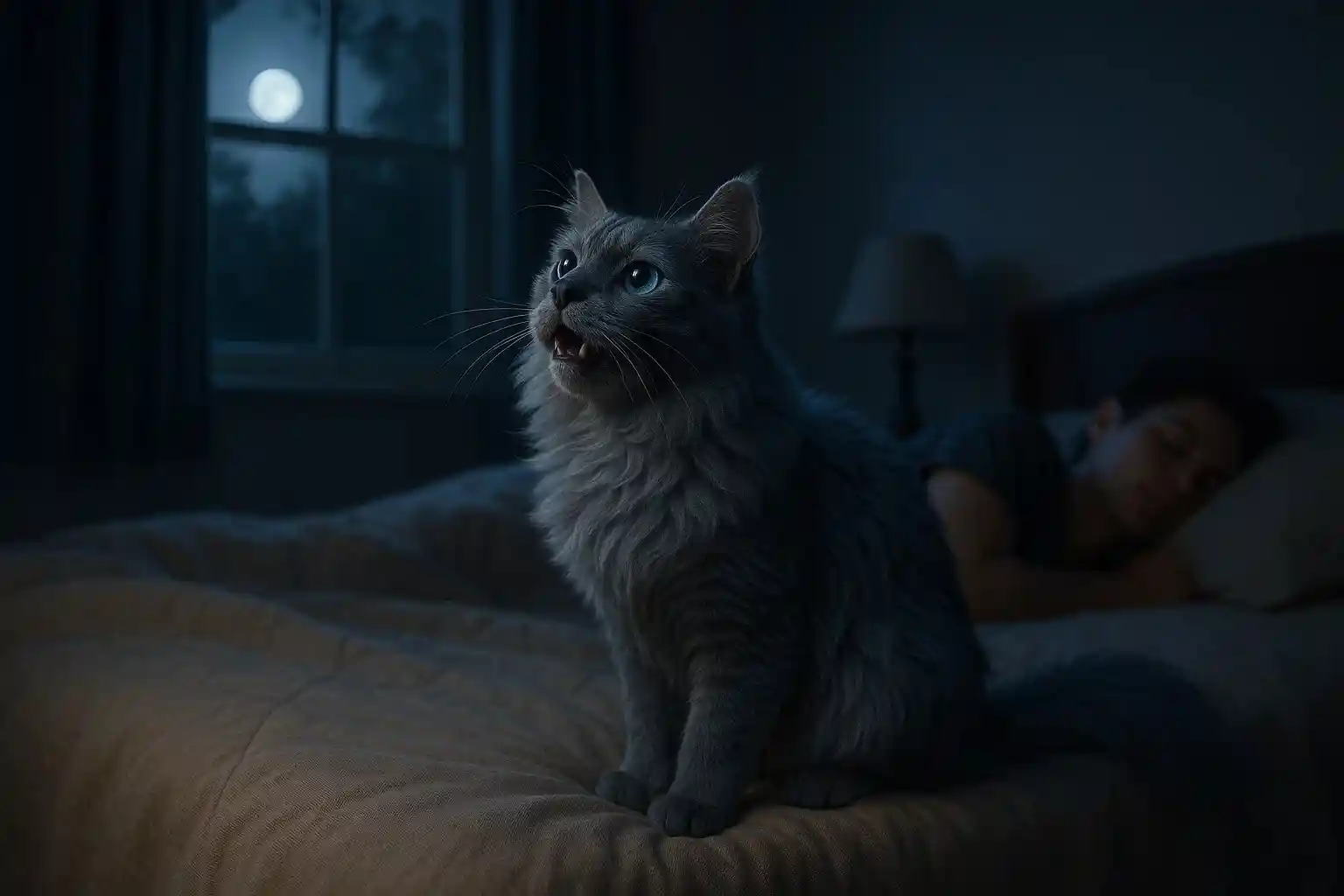
Why is my cat crying again tonight?
It is uncomfortable, this burst of noise in the dark, this scream that pierces the silence and rings like an inquiry you never posed. Yet it is not random. One more profound expression of the cat instinct, longing, discomfort, and the boundaries of its emotional world is nighttime vocalizing. A cat does not speak straight; it speaks in shadows, in rhythm, in signs made by history, by habit and by the relationship it has with you.
My name is Dr. Elara Vance, an animal behaviorist in the United States, and I have spent years observing how cats express their needs, fears, and internal tensions. I have seen nervous cats relax, nervous cats become normal, and desperate owners realize the truth about the midnight meows.
In this blog, I will tell you what I have learned about the reasons why this behavior occurs and how you can react in a manner that fosters peace, trust, and an improved relationship with your cat.
Understanding Nocturnal Instincts In Cats
Cats do not keep to your night time schedule. They live by their inner clock, the one that their ancestors lived by, and that instinct continues to dictate their actions today. When your cat cries at night it is their survival pattern talking in the modern home.
Night Rhythm
Cats are active by instinct in the morning and the evening, and this natural clock has not been changed domestically. Taking place of their instincts is when the house is silent. Their crying often reflects this natural burst of energy and alertness when everything else feels still.
Dark Vision
Cats are much more adept at low light observation than humans and therefore night is a living world. They observe motions, shadows and sounds that you cannot hear. Crying can be their way of responding to these signals or trying to express heightened awareness.
Read Also: Why Does My Cat Twitch In Her Sleep
Hunting Roots
Your cat can be kept indoors but their instincts of hunting never go. The need to stalk, scan and respond to subtle sounds is activated by night. Their cries echo behaviors once used to communicate readiness or respond to potential prey activity in the wild.
Stored Energy
Cats nap frequently, saving energy throughout the day. When that unused energy peaks at night, they become restless. Crying becomes a natural outlet, especially when their active hours collide with your need for rest and quiet.
Hunger & An Irregular Feeding Schedule
Cats often cry at night when their feeding rhythm breaks. A disrupted schedule makes them uneasy, alert, and ready to call for you the moment their stomach feels empty. This is enhanced by night which makes hunger the sound of emotion.
Late-Night Hunger
Cats are quick food eaters especially young or active cats. When dinner is too soon they wake up uneasy and dissatisfied. That recurring hunger causes them to roam, weep and find you since you are the source of comfort and steadfastness.
Stress From Emptiness
A cat that is starving is not empty just physically. Hunger narrows instincts and sharpens the senses, each sound of the night appears to be more significant. This strain goes on up to crying, a means of them relieving the stress which they cannot relax alone.
Routine Brings Ease
Regular mealtimes guide your cat into a stable rhythm. Predictability creates emotional safety, easing their mind and reducing anxious nighttime behavior. When their body knows when food arrives, their entire evening becomes calmer and more peaceful.
Nighttime Snack
A small meal before bed fills the overnight gap that often triggers crying. It helps keep your cat relaxed, avoids their waking up due to hunger, and adds more time to silence in your home without substantial changes in your lifestyle.
Check Also: Daily Pet Calorie Needs Calculator
Seeking Attention & Companionship

Cats are crying at night because they do not want to be separated when the whole world is silent. They are shouting to you, they want you to console or comfort or even just remind them they are not in the dark alone.
Night Loneliness
When silence settles, your cat feels the emptiness more deeply. Darkness sharpens their awareness, and your absence becomes heavier. Their cry isn’t misbehavior; it’s longing, shaped by the comfort they expect from your presence and the bond they believe is shared.
Craving Presence
A nighttime cry can be your cat’s attempt to reconnect. They aren’t seeking attention for amusement — they’re seeking familiarity. You become their anchor, and calling out is the only way they know to reach you through the stillness.
Under-Stimulated Minds
Cats who don’t burn enough energy during the day stay mentally restless at night. Their mind keeps running when everything else is asleep. They cry because they instinctively turn to you as the only source of stimulation they trust.
Routine Shifts
Any little alteration in your routine will disturb your cat. Evenings make them emotionally unsteady when they are unpredictable. Their nighttime cry becomes an attempt to regain stability and reconnect with the rhythm they depend on.
Check Also: Is My Pet Bored? Assessment
Stress & Environmental Changes
Cats feel shifts in their world deeply. They can be shaken even by minor changes and such an emotional disbalance manifests itself in nighttime crying. When they are in a tense or unfamiliar environment, they relieve this tension by sound, particularly when the house is still.
Routine Changes
Any shift in your schedule affects your cat’s sense of predictability. Late nights, unusual feeding times, or inconsistent attention unsettle them. This instability builds into nighttime crying because they’re trying to understand a routine that no longer feels steady or secure.
New Faces
A guest, newborn, or new pet introduces unfamiliar energy. Your cat feels this as a disturbance to their territory and emotional space. The tension becomes stronger at night, and their crying reflects the anxiety of adjusting to someone who alters their safe world.
Disturbing Noises
Noise, noise; traffic and construction, fireworks, overwhelm them with their senses. These sounds are more brutish and violent at night. It is a way of coping with the stress, and they ground themselves when they feel that the environment is at a loss, or full of unpredictable bursts of sound.
Pet Tension
Household pet fights produce protracted emotional stress. Your cat is jealous of the territory or he is not calm, unsatisfied with friction. At night when all is put away they become anxious, and cry, the tension of the anxiety they had repressed during the day.
Check Also: Is My Pet Stressed? Score
Senior Cats & Cognitive Decline
Older cats also move the night differently and may cry to express that they are lost or lost their confidence or their minds were no longer able to plot the world as plainly as they used to. Their nights are more raucous and restless when age alters their inner world.
Losing Direction
An elderly cat can cry due to the fact that it is not used to new rooms. Their internal map becomes cloudy, and they do not know their position. This indecision is intensified at night, whereby darkness increases their confusion and they call out, to be reassured.
Forgetful Moments
Cognitive decline impairs memory making an elderly cat lose the routines they used to follow with ease. They can weep because they fail to remember what happened of you, what you did at dinner or at bedtime.
Night Restlessness
An elderly cat finds it difficult to maintain long and peaceful sleep cycles as it gets older. During late hours, restlessness increases and results in wandering, pacing or crying. The silence of the night weighs down their uneasiness and they speak out about their suffering.
Growing Anxiety
When cognitive decline occurs, elderly cats tend to be clingy or anxious. They lose emotional capacity and become highly sensitive to minor shifts. Crying is a method to relieve stress and to indicate that they require consistency, intimacy, and reliable care.
Check Also: Senior Pet Quality of Life (QoL) Score
Health Issues That Cause Night Vocalization
Crying at night may indicate that something is amiss with your cat. Silence of the night enhances pain and only by speaking they are able to articulate what is happening to them.
Hidden Pain
It is an instinct to conceal pain, yet cats conceal it more easily by night, when it becomes difficult to conceal. Arthritis, injuries, or dental pain tend to sharpen at night. And when your cat cries, they are crying out anguish they cannot otherwise express.
Thyroid Imbalance
Hyperthyroidism accelerates the whole system of your cat making him restless and anxious, which climaxes at night. Their heart beats, their hunger is so high, and they cannot rest. These inner shifts tend to cause loud vocalizing because this energy overwhelms them.
Kidney Strain
Barring kidney disease or urinary pain causes nausea, tension and internal stress that increases after sunset. Cats cry due to many reasons such as thirst, sickness, or failure to urinate in comfort. They develop silently and therefore early intervention is significant.
High Blood Pressure
Hypertension affects vision, comfort, and stability, making nighttime especially disorienting. Cats may cry out of confusion or sudden fear when their blood pressure spikes. This condition often connects to thyroid or kidney issues, making screening essential.
Digestive Trouble
Constipation, gas or stomach inflammation will be more pronounced when your cat is lying during night. Pacing, crying or agitation will be caused by stomach pains as they attempt to relieve the tension.
Check Also: Pet Health Symptom Checker
Territory, Outdoor Noises, & Prey Drive
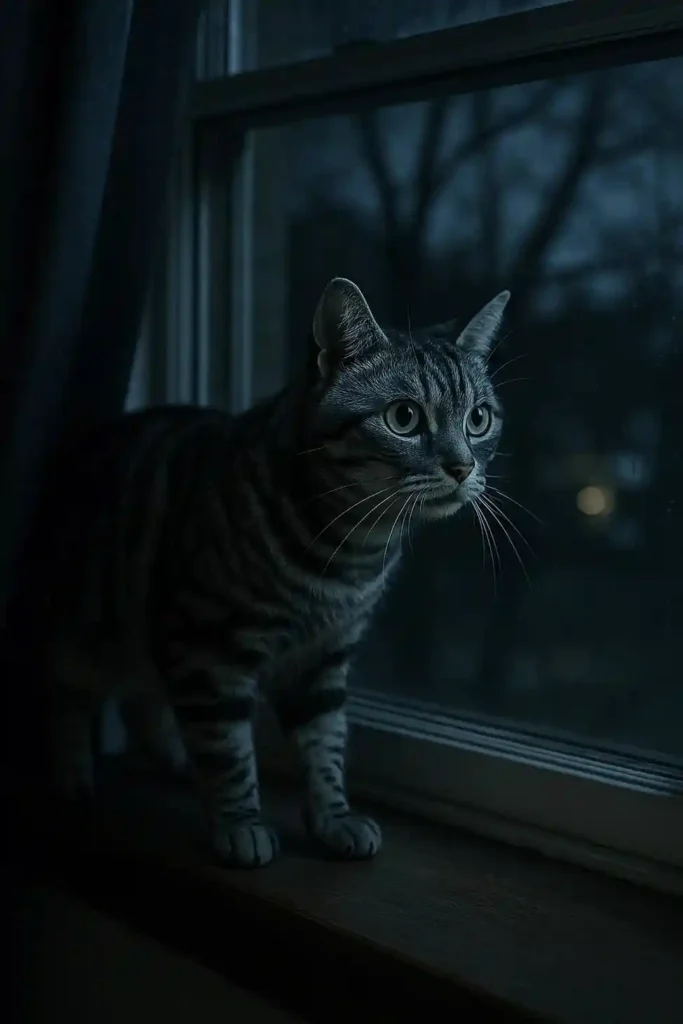
Cats are more anxious about the night than you. The silence, the smells and the far away murmurs bring back the instincts that are thousands of years old. Their nighttime crying often begins with something subtle that their senses catch long before yours.
Night Sounds
Cats pick up faint noises you barely hear; a stray outside, a shifting bird, or distant movement. These sounds activate their alert mode, pushing them to vocalize as a natural response to stimulation, curiosity, or sudden nighttime tension.
Guarding Space
Territory matters deeply to cats. When they sense another animal nearby, their protective instinct rises. Crying becomes their way of warning intruders and asserting boundaries, even if the “danger” is simply a passing cat or a scent drifting through a window.
Hunting Drive
Night awakens their primal instincts of predators. Even domestic cats have a need to stalk and hunt. The combination of excitement and frustration as they feel the movement that they are unable to pursue results in vocalizing due to pent-up hunting energy.
Strong Scents
Outdoor smells travel easily at night. One new smell can be a menace or a challenge to your cat. In the absence of the source, they respond by crying, pacing, or alertness as they attempt to make sense of what their senses are sensing.
Check Also: Pet Safe/Toxic Food Lookup
Tips To Prevent & Reduce Nighttime Crying
Nighttime peace comes from small, steady habits. When you shape your cat’s evening with routine, comfort, and calm guidance, their world becomes less confusing.
Stable Routine
Cats are more secure when there is a routine to life. Frequent feeding, play and rest make their day routine and alleviate anxiety at night. When their schedule steadies, their emotions settle, making late-night vocalizing soften into comfort instead of confusion.
Evening Play
Focused play before bed helps burn off instinctive energy. Toys that imitate the way of natural hunting are wand toys, lasers, or short chase. This gradual act of moving to rest time tells your cat that it is time to relax, and prevent nighttime pacing and vocal outbursts.
Bedtime Snack
A small meal at night keeps hunger from waking your cat. When their stomach feels settled, their nervous system relaxes. This simple adjustment prevents them from calling out in frustration, especially for younger or highly active cats with fast metabolisms.
Cozy Sleep Spot
A warm, soft sleeping space helps your cat feel secure. Darkness, blankets and a hidden nook minimize night time wandering. As they feel safe to find a place to go, their psyche is relieved, and the desire to cries turns to formlessness.
Check For Health Issues
Intense or sudden crying usually indicates pain or disease. Early issues can be observed when people use litter, eat, or move. Veterinary check-ups will assist in giving your cat the care it deserves that will alleviate pain that might be making them cry at night.
Check Also: Cat Litter Box Setup Score
FAQs:
Why do cats cry?
They scream to show instinct, pain, solitude, hunger, or emotional demand.
Is night crying normal?
Yes, but persistent or sudden crying often signals stress, hunger, or pain.
Why more at night?
Cats become alert in darkness and react strongly to sounds or instincts.
Can hunger cause crying?
Yes, hunger triggers vocalizing, especially when feeding schedules are irregular.
Final Words:
Nocturnal crying is not your cat acting hard it is your cat attempting to speak its language. Once you are aware of the instincts, needs, signals that are behind those nocturnal sounds, the whole story is not frustration, but empathy. Your cat is not trying to trouble your peace; it is trying to seek its own. You build a saner world both of you when you mold their routine, soothe their stress, and watch how their behavior is shifting.
The evenings grow quieter, the bondage grows closer, and you can hear the purpose of each meow. My work taking care of a cat is never quiet work, however; it is never meaningless.
3 thoughts on “Why Does My Cat Cry At Night”