
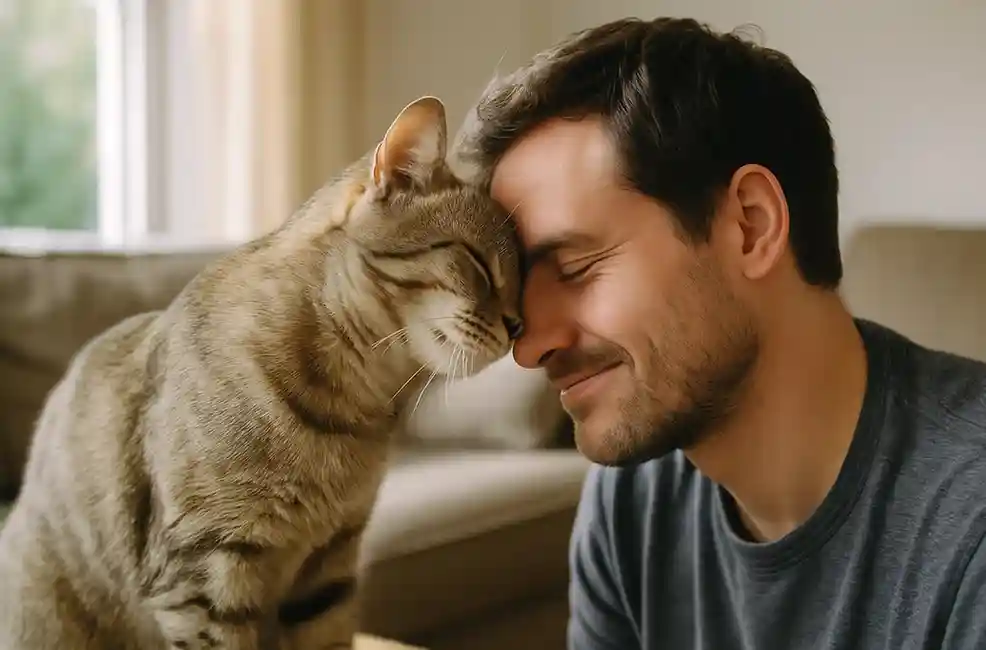
Why do cats headbutt trusted individuals?
This little, virtually painless act has a weight behind it years of silent comradeship, years of emotion, years of instinct. When your cat rubs his head on you he is building a bridge between his inside world and yours using smell, confidence and social connection. It is a personal mark of contact, a mark of emotional reassurance and a ritual based on the connection style of cats.
My name is Dr. Elara Vance, a U.S. citizen, a behavioral researcher, and a person who has cohabited with cats since childhood and knows the language they speak when they touch. My days are spent learning about animal communication that is so easy to ignore. And I write to help you understand your cat the way they understand you.
In this blog, I’ll guide you through every meaning behind your cat’s headbutting. You’ll learn exactly what it says about their trust, their needs, and your bond.
Scent Marking & Familiar Smells
When bumped on the head by your cat, they are anointing you with the scents glands along the cheeks and the forehead, as a part of their safe zone. Scent is their emotional anchor which produces the comfort, routine, and connection.
Why Scent Matters
Cats depend on scent to understand their surroundings, build emotional safety, and recognize trusted beings. They are surrounded by low level chemical communication that tells them who should be in their circle. As your scent mixes with theirs, this makes them know that their surrounding is stable, predictable, and full of comfort they have known before.
How Headbutting Works
A light, comforting smell emits through the facial scent glands when your cat lays their head on you. This smell does not pervade and occupy; it gently connects you to their internal sense of safety. Each headbutt becomes a renewal of connection, reinforcing their trust and reminding them that you’re a source of calm.
Read Also: Why Does My Cat Drool When I Pet Him
What It Means For You
By marking you with the scent of the cat, they are showing their great trust and acceptance. This action makes you a member of their emotional zone, and it proves that you can bring them harmony and a sense of belonging. It signals that your bond is strong, stable, and meaningful to them.
Pet Allergy Symptom Quiz
Building A Strong Cat–Human Bond
By headbutting you, your cat is reinforcing the emotional connection that causes you to belong to their inner circle. It is such a little stroke that interweaves their smells with yours, and confirms to them that your relationship is stable and secure.
Shared Social Connection
When you are hit by your cat, they reinforce the emotional bond between you and them. Cats are social creatures that use physical contact and scent marking to develop true social relationships and bunting is one of the best ways to tell them that you belong to their inner circle.
Group Identity
Multi-cat groups mark up each other in order to blend smells and establish collective identity. As soon as your cat does this to you they are tucking you into the same invisible family smell. You are accepted into their inner circle as one they know not only physically but also emotionally and chemically.
Emotional Stability
Headbutting also supports their emotional balance. The act gives out relaxing pheromones, make them feel stable and safe. You are a stabilizing force and their association with you adds to that feeling of comfort, safety, and routine.
Read Also: Why Does My Cat Sleep At My Feet
Everyday Relationship Maintenance
Such a habit tends to become a routine, a morning greeting, a night check-in, or an instance of silent intimacy. With every soft push, your cat keeps your relationship vibrant, known and comforting. It is their means of keeping a relationship they cherish.
Check Also: Pet Human Age Converter
Shared Territory, Not Control
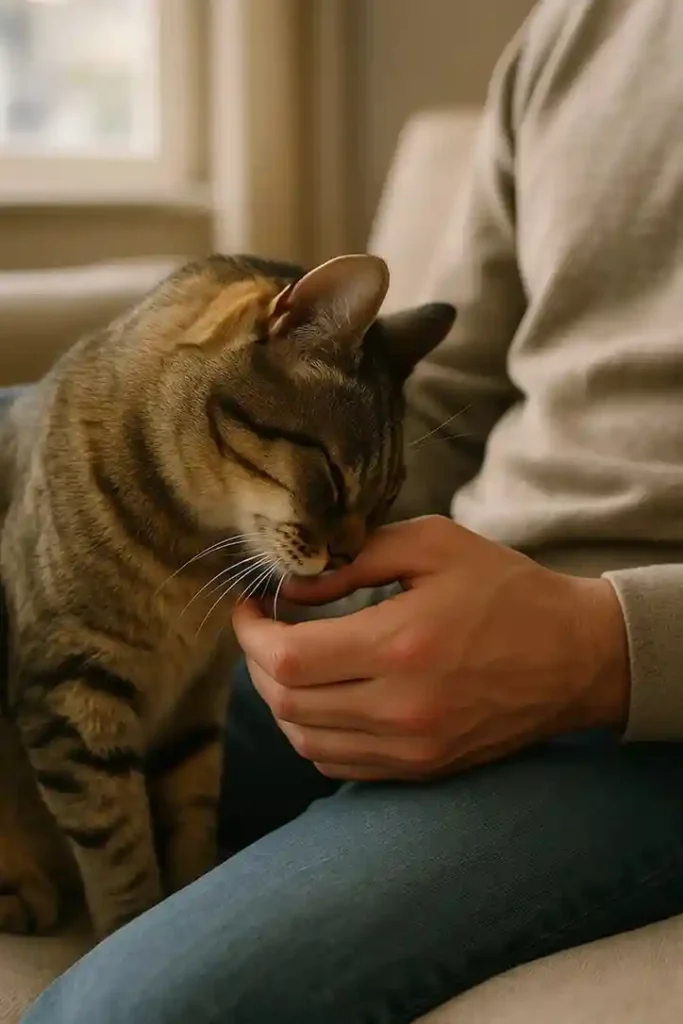
That is not when your cat headbutts you, it is an invitation to spend emotional space together with them. Cats have a smell relationship and by mixing their smell with yours they create a relaxing familiar smell.
Scent Blending
Your cat intermingles with your scent, enhancing social bonding. Their cheek and forehead glands produce pheromones that attract safety and proximity. When they rub their head on you, they are building up a complex scent signature that lets their instincts know they are with someone safe, familiar, and emotionally significant.
Emotional Territory
Territory is not about dominance to a cat but is emotional. When a location feels relaxing, sensible, and relatable to a person they relate with, then it becomes theirs. They make you be a part of the emotional map by headbutting you, making you a part of the safe territory they count on to be secure and comfortable.
Living In Their Circle
Cats only allow their inner circle to those they trust. By letting your cat headbutt you they are telling you that you are in that protective, close environment. It is a gateway to their social life, where only chosen creatures are welcomed and they feel that they are understood, supported, and emotionally attached.
Check Also: Pet-Friendly Plant Safety Checker
A Request For Affection Or Attention
Your cat is tapping you on the head with one of the sweetest expressions of emotional sincerity when they are demanding to be loved. This tender touch is their silent means of expressing that they need intimacy, coziness, or just a time together with you.
When They Want Contact
When your cat boons you to show some love, he or she is just starting a face-to-face situation. It is a greeting gesture on the part of your cat and it implies that they are seeking your touch, your voice or your presence first.
How They Seek Your Attention
There are cats that you headbutt just to get you adjusted. They exchange this short rap of their forehead to realize your attention to them, particularly when they feel neglected or need attention. You may get them kick you and then wait till you look at them or touch them with your hands, so that the exchange is made a little ceremony.
What Their Body Language Adds
Their intent is not difficult to read, as they do immediately after the headbutt. An elevated tail, a purr, categorical blinking, or leaning their body on you normally signifies that they desire affection. It is a quick rub and then they sit and stare at you, telling you that they require your attention, be it in the form of play, comfort or just plain companionship.
Why This Behavior Matters
This is not a mere physical act, but an emotional one. It indicates that your cat is comfortable enough to come to you to reassure and seek social intimacy. When they bump you to get your attention, they are selecting you to be their comforter; indicative of a strong trust and good attachment.
Check Also: Is My Pet Stressed? Score
Emotional Signals & Mood Meaning
Cats do not use loud expressions as humans, they express themselves in gentle purposeful movements. One of their most obvious emotional cues is headbutting and it tells you how they are feeling at that time and how they feel towards you.
Happy Mood
When you are safe and secure, a relaxed confident cat will go up to you and butt you. This form of bunting is accompanied with lazy eyes, slow blinking, purring light, or relaxed body language.
Comfort Seeking
Some headbutts happen when your cat needs emotional stability. They may bunt softly, stay close, or push their head into your hand because your presence brings them comfort and grounding.
Social Warmth
Headbutting is also used by cats to demonstrate affection and attachment. It is a welcome, an affirmative emotional monitoring, and how they hold on to each other with small touches.
Emotional Release
Headbutting to some cats is an expression of pent-up emotions. It assists them to show love or alleviate tension or switching alertness to relaxation in your presence.
Check Also: Pet Sleep Needs Estimator
Routine & Everyday Connection
Your cat is headbanging to set you down to the pace of his day. It turns into a comfort zone that helps them know that their world is not under threat. Repeating this action at particular times, you cat keeps itself in routine, relieves stress, and makes your daily connection stronger.
Daily Check-In
Headbutting Headbutting is your cat’s swift check-in, which ensures your presence and emotional drive. This small act brings them down to earth and strengthens the stability they need. Their way of saying everything is normal, life is fine, and the relationship between you and me is in its place perfectly.
Stability Through Repetition
Cat loves routine and repeating the headbanging behavior every day at the same time causes a comfortable predictability. These minor rituals make your cat feel safe and strengthen your position in its routine.
Emotional Syncing
Headbutting helps your cat tune into your mood, creating a shared emotional flow. This simple gesture allows them to read your energy, match your calmness, and build a deeper bond. It is a little but significant experience in which you both reconnect and reset as one.
Check Also: Pet Medication Reminder/Tracker
Establishing Trust & Vulnerability
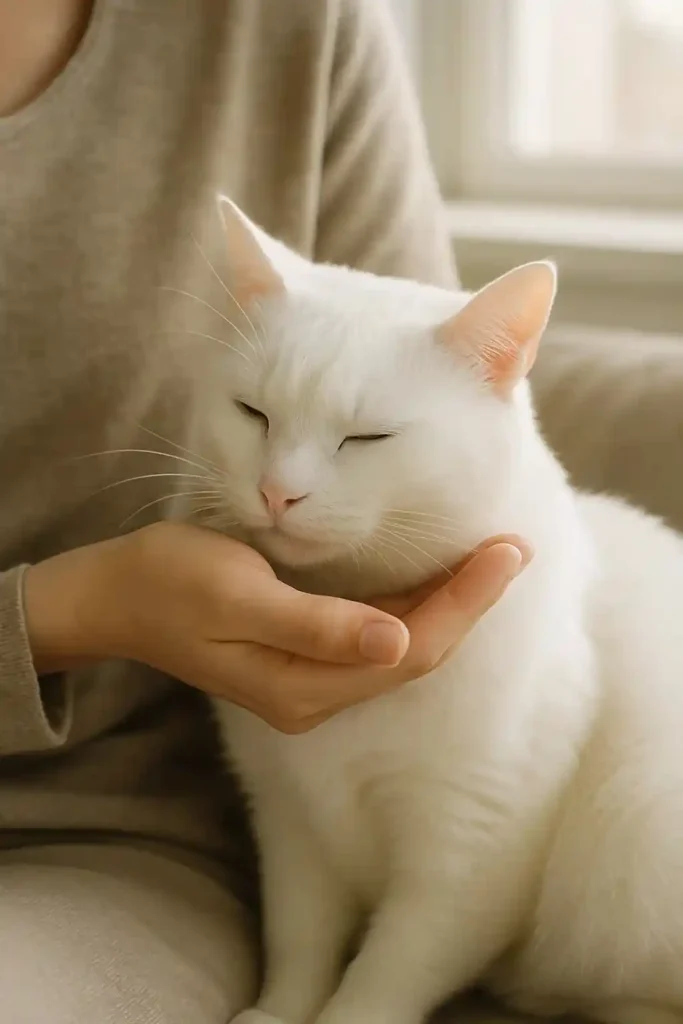
You are experiencing uncharacteristically emotional openness when your cat has headbutted you. Their face is the tenderest part of their body and pressing it against your body is a show of great trust. This is to inform you that they are safe, stable and secure about your presence.
Read Also: Why Does My Cat Sleep by My Head
Soft Exposure
A cat only exposes their face when they feel truly protected. The emotional safety, serenity, and utter comfort are echoed by this soft contact. And as they lean forward, they are even drawing down their defenses and letting you into their personal space.
Safe Connection
Headbutting becomes a grounding ritual for your cat, reinforcing that your presence brings stability. This gentle touch marks you as someone who provides emotional balance. When they choose closeness over caution, it shows they rely on your consistency.
Deep Bond
This action is an indicator of a relationship that has been built over time, esteem, and routine comfort. Cats do not express vulnerable motions to anyone, but only to people who have shown reliability. A headbutt indicates that they no longer think of you as a caregiver; they consider you to be a friend that they rely on, trust, and even connect with.
Check Also: Senior Pet Quality of Life (QoL) Score
Responding To Your Cat’s Headbutting
When your cat headbutts you, they are reaching out to you, through smell and touch to reconnect. How they feel in your presence depends on your reaction. A soft, relaxed response solidifies your connection, creates trust, and transforms them into a mutual rhythm that your cat can count on to find comfort and safety.
Gentle Touch
Give slow, gentle strokes on their cheeks or forehead, no hurry and do not hurry the moment. Cats use their bodies to communicate, and by responding to touch they are made to feel you have appreciated their emotional language.
Soft Presence
Your energy speaks louder than words, your cat. Maintain a relaxed movement and a soft voice to make the moment safe and grounding. This constant presence assures them and makes them remain confident in your presence.
Positive Routine
Make headbutting part of your routine. Cats live through repetition of close contact and repeating this tender ritual makes them feel safe. Being able to react reliably helps build emotional stability and make them aware that you are a reliable person in their lives and can be approached without any reservations.
Respect Signals
When your cat runs off, stalls, or shifts his head, leave him room. Cats like their privacy and respect of their signals builds trust. By letting them dictate the interaction, you are aware of their limits, which strengthens your bond and fosters healthier, more assured communication in subsequent encounters.
When Something’s Off
Headbanging is gentle and friendly, but banging the head on the walls, floors or furniture is dangerous. It can be a sign of neurological conditions or agonizing pain. When you happen to find this, call on a veterinarian.
Check Also: Cat Litter Box Setup Score
FAQs:
Why the face bunt?
Your face is the ultimate trust zone. Only deeply trusted humans get facial bunts.
Why headbutt then leave?
They delivered the message. After bonding, they simply return to their usual routine.
Is headbutting asking attention?
Often yes. Many cats use bunting as their gentle request for closeness or petting.
Is this behavior normal?
Completely. Bunting is a natural, healthy part of feline social communication.
Final Words:
As soon as your cat is sticking his nose against your face and is curled up, he or she is choosing in favor of vulnerability, intimacy, and emotional integrity. Simple touch has undertones of trust, scent, memory and instinct a little moment that tells you, you belong to their safe world. Headbutting isn’t random affection; it’s their quiet way of keeping you woven into their daily rhythm and their sense of security.
You are rooting the connection they are giving you by reacting with composed energy and respect to their cues. Next time your cat pushes his or her head into you, then make it what it is; a gentle, honest point that they need you in the only way that a cat could do so.
2 thoughts on “Why Does My Cat Headbutt Me”